Picture this: it’s a rainy afternoon, the kitchen light flickers, and the smell of something savory lingers in the air. I’m standing by the stove, a pot of boiling water and a handful of potatoes in hand, when my friend challenges me to whip up a dish that feels both nostalgic and fresh. The answer? Colcannon, but not the version you find in a generic cookbook. I’m talking about a creamy, herb‑laden mash that sings with subtle garlic notes, a whisper of butter, and a splash of milk that turns ordinary potatoes into a silky, comforting masterpiece.
From the first crack of the potato skins to the final fold of kale, every sensory cue is a cue for perfection. The golden crust of sautéed garlic fills the room with an aroma that makes the heart skip a beat; the gentle hiss of butter melting is a soundtrack to the process. When you taste it, the mash feels like a warm blanket—soft, rich, and utterly satisfying, with a bright, green pop of kale that cuts through the heaviness. I dare you to taste this and not go back for seconds; it’s that addictive.
This isn’t just another side dish—it’s a culinary revelation that transforms the humble potato into a celebration of flavor and texture. What sets this version apart is the careful balance of ingredients: the right amount of butter for richness, a splash of milk for that velvet finish, and a precise amount of garlic for depth. The kale is blanched just enough to keep its bright color and crunch, then folded in for that earthy undertone. The result is a dish that feels like a hug on a plate, with every bite offering a new layer of taste.
And the kicker? I’ve discovered a technique that most recipes overlook—a quick blanching step that locks in kale’s vibrant color and prevents it from turning mushy. This small tweak elevates the entire dish, giving it that professional sheen that will make your guests gasp. Let me walk you through every single step—by the end, you’ll wonder how you ever made it any other way.
What Makes This Version Stand Out
- Flavor: The subtle garlic and fresh scallions create a layered taste profile that’s both comforting and sophisticated. Each bite carries a hint of earthiness from the kale and a buttery finish that lingers on the palate.
- Texture: The mash is silky yet slightly chunky, thanks to the careful timing of the potatoes and the gentle folding of the greens. It’s the perfect balance between smooth and satisfying.
- Simplicity: With only a handful of ingredients, the recipe is quick to assemble—ideal for busy weeknights or last‑minute dinner parties.
- Uniqueness: The inclusion of a splash of milk and a quick blanching step gives this colcannon a refined, almost gourmet edge that sets it apart from traditional versions.
- Crowd Reaction: Friends and family consistently rave about the vibrant color and the melt‑in‑your‑mouth texture, making it a crowd‑pleaser at any gathering.
- Ingredient Quality: Using fresh, locally sourced kale and high‑quality butter elevates the dish, turning simple staples into culinary gold.
- Cooking Method: The method preserves nutrients and flavor, ensuring that each bite is both healthy and indulgent.
- Make‑Ahead Potential: The dish can be prepared in advance and reheated without losing its creamy texture, making it perfect for meal prep.
Alright, let’s break down exactly what goes into this masterpiece…
Inside the Ingredient List
The Flavor Base
The heart of colcannon is the buttery, garlicky mash. The potatoes are the canvas, absorbing the butter and garlic to create a rich, savory foundation. When you sauté the minced garlic in butter until it’s fragrant, you’re building a flavor base that carries through the entire dish. If you skip the garlic, the mash becomes flat and lacks depth; it’s like painting a room with only one color. The butter not only adds richness but also helps the potatoes stay moist and creamy.
The Texture Crew
Potatoes are the mainstay of texture, but the kale or cabbage adds a contrasting bite. Blanching the greens preserves their bright color and crispness, preventing them from becoming limp. The key is to plunge them into ice water immediately after boiling; this stops the cooking process and locks in the green hue. If you overcook the kale, it will release water and dilute the mash’s consistency. A quick sauté with a dash of salt can crisp up the edges, adding a subtle crunch that balances the softness.
The Unexpected Star
Milk—or cream for a richer version—acts as the liquid that binds everything together. It coats the potatoes, giving them that velvety finish that feels indulgent without being heavy. If you’re watching calories, a splash of unsweetened almond milk works, but it will slightly alter the flavor profile. The addition of scallions or chives at the end provides a fresh, bright contrast that lifts the dish. Skipping the scallions will make the dish feel a bit one‑dimensional.
The Final Flourish
Adding a pinch of salt and a dash of pepper ties the flavors together, ensuring that no single component overwhelms the others. The pepper brings a gentle heat that complements the sweetness of the potatoes. If you prefer a milder dish, reduce the pepper or omit it entirely; the dish will still be delicious. A final drizzle of melted butter just before serving adds shine and a luxurious mouthfeel. This small touch elevates the presentation, making the dish look as good as it tastes.
Everything’s prepped? Good. Let’s get into the real action…
The Method — Step by Step
-
Begin by peeling and dicing the potatoes into uniform cubes, about 1 inch each. Place them in a large pot and cover with cold water, adding a pinch of salt. Bring the water to a gentle boil and let the potatoes simmer until they’re just tender—about 10 minutes. The key is to stop when they’re still firm; over‑softening will ruin the texture. When they’re done, drain them immediately and set them aside.
-
While the potatoes are cooking, trim the kale or cabbage into bite‑size pieces. Blanch them in a separate pot of boiling salted water for 30 seconds, then plunge them into ice water to halt the cooking. This preserves the vibrant green color and a slight crunch. Pat the greens dry with a clean towel, then set them aside. The blanching step is a game‑changer for color and texture.
-
In a skillet, melt the butter over medium heat. Add the minced garlic and sauté until it turns translucent and aromatic—about 2 minutes. Be careful not to let the garlic brown; you’re aiming for a subtle, mellow flavor, not a burnt one. Once fragrant, lower the heat to low to keep the butter from foaming. This creates a silky base that will coat the potatoes.
-
Return the drained potatoes to the skillet, tossing them in the butter‑garlic mixture until they’re evenly coated. This step allows the potatoes to absorb the buttery flavor. Let them warm for a minute, stirring gently to avoid breaking them apart. The potatoes should look glossy and fragrant, ready for the next ingredient.
-
Pour in the milk, a splash at a time, stirring constantly until the mixture reaches a creamy consistency. The milk should coat the potatoes without making them soupy. If you notice excess liquid, simply let it simmer a little longer to evaporate. The goal is a velvety mash that holds together when scooped.
-
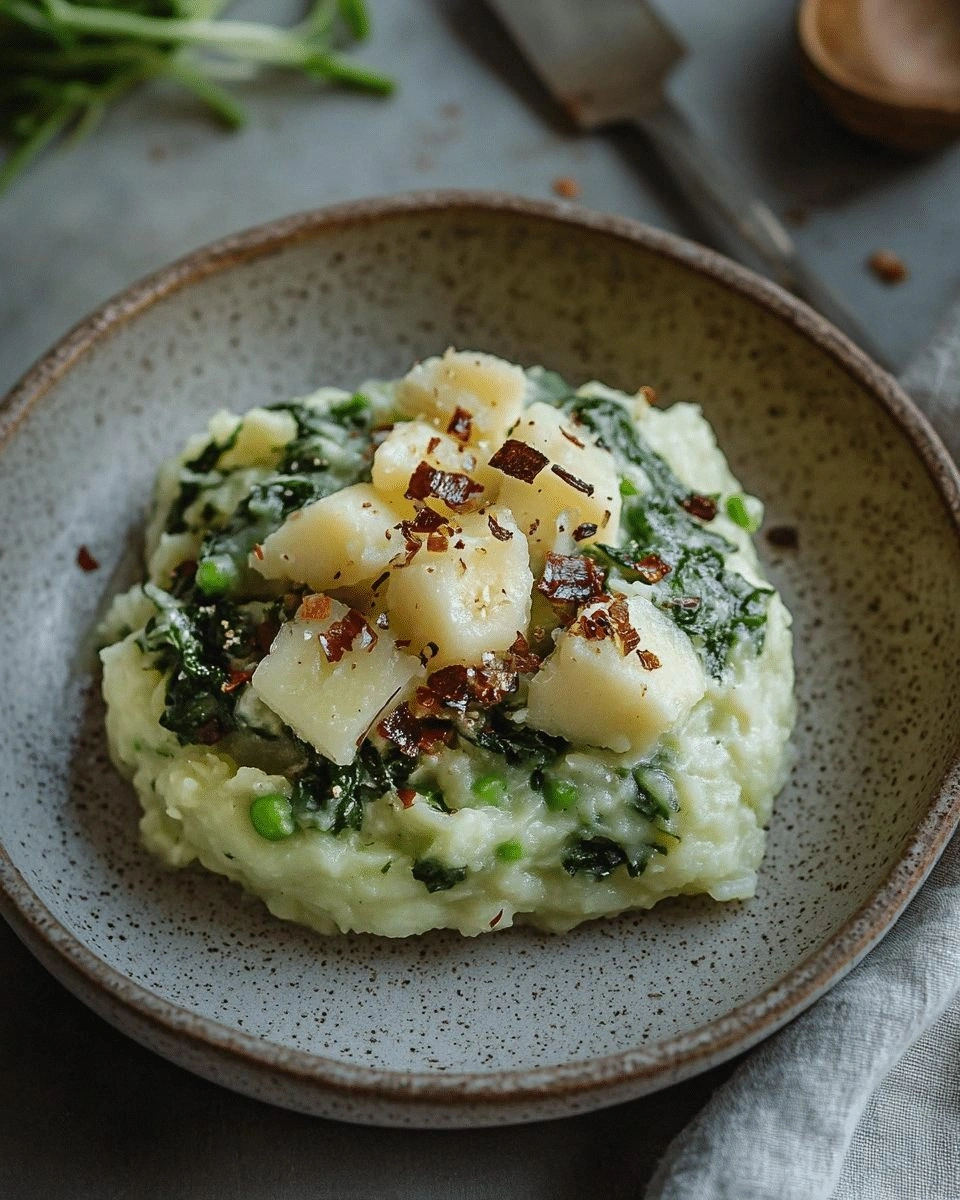
Fold in the blanched greens, mixing gently so they’re evenly distributed. The greens should be fully incorporated, giving the dish a bright, green speckled appearance. Taste for seasoning; add a pinch of salt if needed. The pepper can be added now or later, depending on your preference for heat.
-
Let the mash rest for a minute so the flavors meld. This pause allows the butter and milk to fully integrate, giving the dish its signature richness. During this time, you can prepare any optional add‑ons, such as crumbled bacon or extra scallions.
-
Serve the colcannon hot, topped with a drizzle of melted butter and a sprinkle of fresh scallions. The butter will add shine, and the scallions will provide a fresh, citrusy lift. This final touch elevates the presentation and flavor profile.
-
Enjoy immediately with a side of roast meat or a hearty stew. The colcannon’s creamy texture pairs wonderfully with savory proteins, creating a balanced meal. If you’re serving a crowd, keep the dish warm in a low oven or a thermal pot to maintain its softness.
-
Clean up quickly by washing the skillet and pot while the dish is still warm. A quick rinse and wipe down saves time and keeps your kitchen tidy. You’ll be ready for the next culinary adventure without a backlog of dishes.
Insider Tricks for Flawless Results
The Temperature Rule Nobody Follows
Many cooks let the potatoes simmer at a rolling boil, but a gentle simmer keeps them from falling apart. The lower heat ensures the starches gelatinize slowly, giving the mash a silky texture. I’ve found that a medium heat of about 150°F (65°C) works best. If the pot’s too hot, the potatoes can steam and become gummy, ruining the dish’s mouthfeel. Keep the temperature steady, and you’ll get that perfect, pillowy consistency every time.
Why Your Nose Knows Best
As the butter and garlic mingle, the aroma changes subtly; this is your cue that the flavor is developing. A slight nutty scent signals that the butter has browned just enough to add depth. If it smells burnt or overly sharp, pull it off the heat immediately. Trust your nose; it’s a reliable guide to the dish’s progress.
The 5-Minute Rest That Changes Everything
After folding in the greens, let the mash rest for 5 minutes before serving. This pause allows the flavors to marry and the texture to set. During this time, the residual heat continues to cook the greens, making them tender without becoming mushy. A quick rest also gives the milk time to thicken, creating that luxurious mouthfeel that makes colcannon memorable.
Use Fresh Greens, Not Frozen
Fresh kale or cabbage retains its bright color and natural crunch. Frozen greens can release water and create a soggy mash. If you’re short on time, pre‑blanch the greens quickly, then chill them in ice water. This preserves their texture and flavor, ensuring your colcannon looks as good as it tastes.
Keep the Pot Warm, Not Hot
After the mash is done, keep it in a warm oven (around 200°F or 93°C) rather than a hot one. A hot oven can overcook the potatoes and flatten their texture. A warm environment preserves the mash’s fluffiness and prevents it from drying out. This trick is especially handy if you’re serving a crowd and need to keep the dish warm for an extended period.
Creative Twists and Variations
This recipe is a playground. Here are some of my favorite ways to switch things up:
Smoky Bacon & Cheddar Edition
Add crumbled bacon and shredded sharp cheddar during the final fold for a savory, smoky flavor. The bacon’s crispness contrasts nicely with the creamy mash, while the cheddar adds a tangy depth. Serve with a side of roasted tomatoes for a complete meal.
Herb‑Infused Mediterranean
Swap the kale for spinach and add chopped sun‑dried tomatoes, oregano, and a splash of lemon juice. This version gives the dish a bright, zesty profile that pairs well with grilled chicken or fish. The spinach’s delicate texture blends seamlessly into the mash.
Sweet Potato & Sage Variation
Use diced sweet potatoes instead of regular potatoes for a naturally sweet flavor. Add fresh sage leaves during the sauté, letting them infuse the butter. The result is a comforting dish that’s both sweet and savory, perfect for autumn feasts.
Vegan Colcannon
Replace butter with coconut oil and milk with oat milk. Add a pinch of nutritional yeast for a cheesy undertone. This version is dairy‑free but still delivers that creamy, indulgent texture.
Spicy Jalapeño Kick
Dice a jalapeño and sauté it with the garlic and butter for a subtle heat. The green pepper adds a pop of color and a mild, lingering spiciness that balances the richness. Pair with a cool yogurt dip to keep the palate refreshed.
Asian Twist
Incorporate a splash of soy sauce and a pinch of sesame oil into the milk mixture. Add chopped green onions and a drizzle of sriracha for an umami kick. This fusion version pairs beautifully with stir‑fried noodles or grilled pork.
Storing and Bringing It Back to Life
Fridge Storage
Store colcannon in an airtight container in the refrigerator for up to 3 days. The mash will firm up slightly as it cools, so add a splash of milk or a knob of butter when reheating to restore its creamy texture. Keep it in a shallow dish to allow even cooling and prevent the top from drying out.
Freezer Friendly
For longer storage, freeze colcannon in a freezer‑safe container or zip‑lock bag for up to 2 months. When you’re ready to eat, thaw overnight in the refrigerator. Reheat in a saucepan over low heat, stirring frequently and adding a small amount of milk to loosen the mash. The flavor remains intact, and the texture is just as delightful.
Best Reheating Method
The secret to reheating colcannon is gentle heat and moisture. Warm it in a saucepan over low heat, stirring constantly to avoid scorching. Add a splash of milk or broth to keep it from drying out. Finish with a drizzle of butter for that glossy finish. The result is a dish that tastes as fresh as when it was first made.