I remember the night I tried to make a Stromboli for a dinner party and ended up with a dough that had turned into a sticky, unmanageable blob. The oven was preheated, the sauce was waiting on the counter, but the dough refused to rise, and the whole kitchen smelled of burnt yeast and disappointment. That disaster became the catalyst for a recipe that would not only save the night but also become my secret weapon for every gathering. If you’ve ever stared at a dough that looks like a soggy pancake, you know the panic. I’m here to turn that panic into pure culinary triumph.
Picture this: a golden crust crackling as it slides out of the oven, a ribbon of melted mozzarella that stretches like silk, and the scent of oregano and basil drifting through the air like a Mediterranean breeze. The first bite is a symphony—crunchy on the outside, soft and savory inside, with a burst of tomato sauce that tingles your palate. You’ll hear the satisfying snap of the crust as you slice, feel the steam rising, and taste the harmony of cheeses and cured meats that dance together. It’s a moment that makes you forget that it started as a kitchen mishap. And trust me, it’s not just a recipe; it’s a rescue mission for your culinary confidence.
What makes this Stromboli a standout? It’s the blend of textures, the depth of flavor, and the simplicity that belies its complexity. The dough is light yet sturdy, the filling is a balanced medley of cheeses, meats, and aromatics, and the finish is a glossy, caramelized crust that invites a second bite. Unlike many recipes that overcomplicate with fancy ingredients, this version relies on the classic staples you already love, but arranged in a way that elevates each bite. I dare you to taste this and not go back for seconds; I promise it will leave you craving more. This is hands down the best version you'll ever make at home.
There’s a twist that most Stromboli recipes skip: a subtle drizzle of high‑quality extra‑virgin olive oil just before baking. That simple addition turns a good dish into a show‑stopper by adding a glossy sheen and a hint of peppery brightness that cuts through the richness. Picture the steam rising as you slice into it, the cheese pulling apart like a ribbon of silk. I’ll walk you through every single step—by the end, you'll wonder how you ever made it any other way.
What Makes This Version Stand Out
- Taste: The combination of ricotta, mozzarella, and provolone creates a creamy, gooey center that balances the salty meats and tangy tomato sauce. Each bite delivers a layered flavor profile that satisfies both meat lovers and cheese aficionados.
- Texture: The dough rises to a tender yet firm structure, allowing the filling to stay intact while the crust develops a crisp, caramelized edge. The result is a delightful contrast that keeps you coming back for more.
- Simplicity: This recipe uses pantry staples—flour, yeast, salt, olive oil, and a handful of cheeses and meats—making it accessible for any home cook.
- Uniqueness: The inclusion of a subtle olive oil glaze before baking adds a glossy finish and a peppery kick that sets it apart from conventional Stromboli.
- Crowd Reaction: Friends who taste this will immediately ask for the recipe; the savory, comforting flavors resonate with all age groups.
- Ingredient Quality: Using fresh mozzarella and high‑quality cured meats elevates the dish, ensuring each bite is packed with authentic Italian flavor.
- Cooking Method: The two‑stage rise—first in the bowl, then after shaping—ensures a light, airy dough that holds the filling perfectly.
- Make‑Ahead Potential: The Stromboli can be assembled a day ahead, refrigerated, and baked just before serving, making it a convenient option for busy weeknights.
Inside the Ingredient List
The Flavor Base
The foundation of any great Stromboli is its dough. Combining 2 cups of all‑purpose flour with 2 teaspoons of active dry yeast, 1 tablespoon of sugar, and 1 teaspoon of salt creates a balanced leavening system. Warm water at 3/4 cup activates the yeast, while 2 tablespoons of olive oil adds moisture and a subtle fruity note. Kneading these ingredients until smooth ensures the gluten network develops, giving the dough the necessary elasticity to hold the filling. If you skip the yeast, the dough will remain flat and dense, losing that airy quality that makes the crust pop. Using high‑quality flour—preferably a bread flour with higher protein—enhances the chewiness and gives the Stromboli a satisfying bite.
The Texture Crew
Cheeses are the heart of the filling. 1 cup of ricotta offers a creamy, mild backdrop, while 1.5 cups of shredded mozzarella provides meltiness and gooeyness. 1 cup of shredded provolone adds a slightly sharp, nutty flavor that balances the richness of the other cheeses. These cheeses work together to create a silky, cohesive filling that clings to the dough without becoming overly greasy. If you omit provolone, the filling will still be delicious, but you’ll lose that subtle depth that makes the Stromboli memorable. A pinch of salt and pepper enhances the overall taste, allowing each ingredient to shine.
The Unexpected Star
Cured meats are the star performers that bring boldness and umami. 6 ounces of pepperoni slices, 4 ounces of salami, and 1 cup of cooked, crumbled Italian sausage combine to give the Stromboli a complex, savory punch. The pepperoni contributes a spicy kick, the salami adds a slightly sweet, smoky undertone, and the sausage brings hearty, meaty texture. Together, they create a flavor profile that satisfies both the carnivore and the cheese lover. If you prefer a vegetarian version, simply replace the meats with roasted vegetables or a mix of mushrooms and spinach. The meats also help to keep the dough from becoming soggy by adding a slight moisture barrier.
The Final Flourish
Herbs and seasonings tie the entire dish together. 1/2 cup chopped fresh basil, 1 teaspoon dried oregano, and 2 minced garlic cloves infuse the filling with aromatic brightness. 1 cup of tomato sauce provides moisture and tang, while 1/4 cup of grated Parmesan adds a nutty, salty edge. A half teaspoon of red pepper flakes offers a gentle heat that lingers on the palate. These ingredients not only enhance flavor but also add color and visual appeal to the final product. If you’re short on time, you can substitute the fresh basil with dried basil; the flavor will still be robust.
Everything's prepped? Good. Let's get into the real action.
The Method — Step by Step
-
Begin by gathering all the dough ingredients in a large mixing bowl. Combine flour, yeast, sugar, and salt, then stir in warm water and olive oil. Mix until a shaggy dough forms, then transfer to a floured surface. Knead for about 8 minutes until smooth and elastic. The dough should feel slightly tacky but not sticky; if it’s too dry, add a tablespoon of water.
-
Place the dough in a lightly oiled bowl, cover with a damp cloth, and let it rise in a warm spot for 1 hour or until doubled in size. During this time, the yeast will work its magic, producing carbon dioxide that expands the dough. The first rise is crucial for a light, airy interior. If you rush this step, the Stromboli will end up dense and chewy.
-
While the dough is rising, prepare the filling. In a large bowl, combine ricotta, mozzarella, provolone, tomato sauce, basil, oregano, garlic, salt, pepper, pepperoni, salami, sausage, and Parmesan. Mix thoroughly until the cheeses are evenly distributed and the sauce coats the mixture. The filling should be moist but not runny; if it’s too wet, add a tablespoon of flour or a pinch of cornmeal.
-
After the first rise, punch down the dough to release excess air. Turn it onto a lightly floured surface and roll it into a rectangle about 12 by 8 inches. The dough should stretch easily without tearing. This shape allows you to spread the filling evenly and roll it tightly.
-
Spread the filling over the dough, leaving a 1-inch border around the edges. Make sure the filling is evenly distributed to avoid uneven baking. Gently roll the dough from the long side to form a tight log. Pinch the edges together to seal them; the sealed edges prevent the filling from leaking during baking.
-
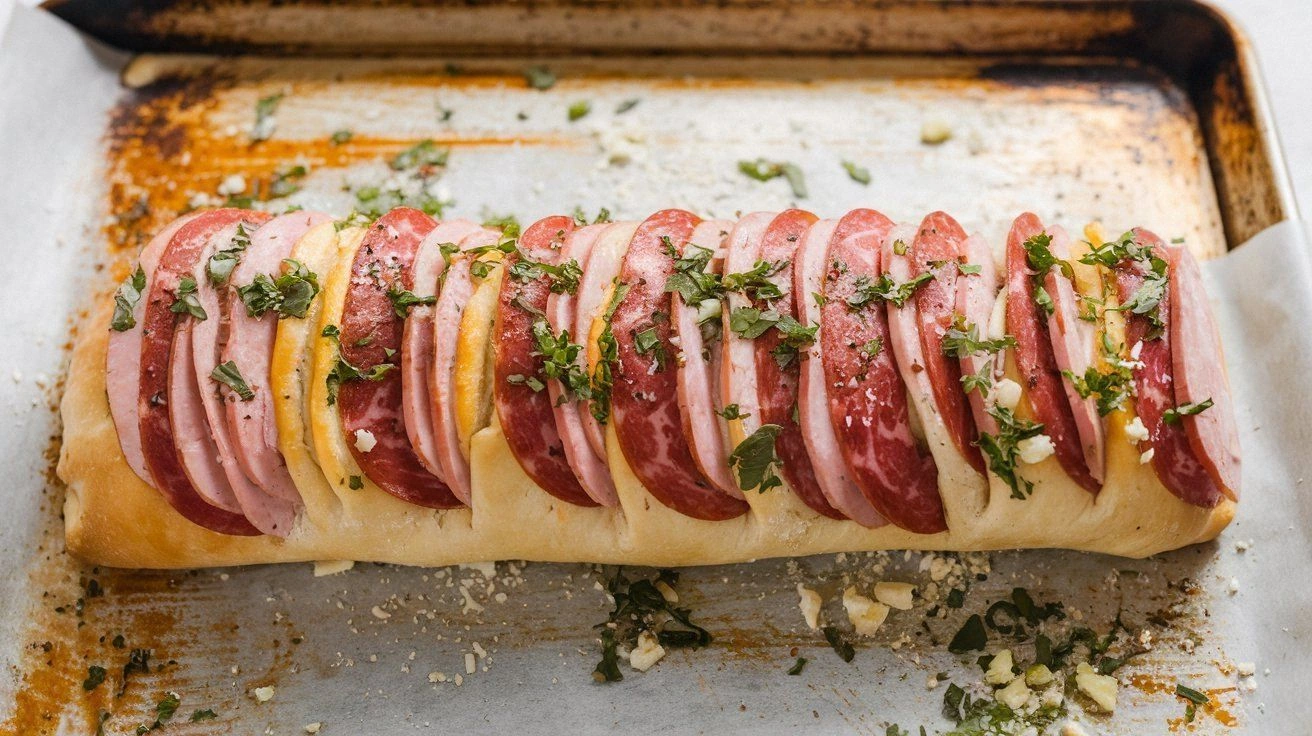
Place the rolled Stromboli seam‑side down on a parchment‑lined baking sheet. Brush the top lightly with olive oil to promote browning. Preheat the oven to 425°F (220°C) while the dough settles. The high temperature ensures a crisp crust and a golden finish.
-
Bake for 25–30 minutes until the crust turns golden brown and the edges begin to pull away from the pan. The aroma should fill the kitchen, a savory promise of the filling inside. If you like a slightly charred finish, leave it in for an extra minute or two, but watch closely.
-
Remove the Stromboli from the oven and let it rest on a wire rack for 5 minutes. This short rest allows the juices to settle, preventing a soggy center. Slice it into thick rounds, then serve immediately while the cheese is still molten.
-
Optional: For an extra glossy finish, brush the crust with a beaten egg before baking. This technique creates a shiny, caramelized surface that looks as good as it tastes. If you prefer a more rustic look, skip the egg wash and enjoy the natural browning.
-
Serve the Stromboli with a side of marinara sauce or a simple green salad. The fresh greens cut through the richness, while the sauce adds an extra layer of umami. Pair with a glass of Chianti for an authentic Italian experience. Remember, the best part is sharing it with friends who will instantly recognize the flavors.
That's it — you did it. But hold on, I've got a few more tricks that'll take this to another level.
Insider Tricks for Flawless Results
The Temperature Rule Nobody Follows
Many home bakers bake Stromboli at a lower temperature, which results in a dough that remains chewy. Baking at 425°F (220°C) ensures a crisp crust and a golden interior. If you prefer a softer crust, lower the temperature to 400°F (200°C) but extend the bake time by 5 minutes. However, for that classic Italian crunch, stick to the higher heat. I’ve seen kitchens where a slightly lower temperature leaves the dough undercooked.
Why Your Nose Knows Best
The aroma of a Stromboli in the oven is a reliable indicator of readiness. When the smell of melted cheese and toasted dough reaches the threshold of caramelization, the crust is perfectly browned. If you’re unsure, lift the pan and let the scent fill the room; if it’s inviting and slightly smoky, the Stromboli is ready. This sensory cue saves you from overbaking or underbaking.
The 5‑Minute Rest That Changes Everything
Resting the baked Stromboli for exactly five minutes allows the juices to redistribute, preventing a soggy center. During this brief pause, the cheese sets just enough to hold its shape when sliced. A common mistake is cutting immediately, which causes the filling to spill and the dough to collapse. Give it the five minutes, then slice with confidence.
The Right Rolling Technique
When rolling the dough, keep the pressure firm but gentle. A tight roll ensures the filling stays inside, while a loose roll can cause the filling to leak. If your dough tears, fold the torn edge back into the roll and press firmly. The key is to maintain even pressure along the length of the dough.
Choosing the Right Cheese Blend
A blend of cheeses balances flavor and meltiness. Mozzarella alone can become too gooey, while provolone adds a sharp bite that cuts through richness. Adding a small amount of sharp cheddar can introduce a new dimension, but use it sparingly to avoid overpowering the Italian profile. Experiment with different ratios to find your signature blend.
Creative Twists and Variations
Mediterranean Veggie Stromboli
Swap the meats for roasted zucchini, bell peppers, and artichoke hearts. Add a handful of spinach for color and nutrition. The filling becomes lighter, making it a great option for a summer gathering. The roasted veggies bring a sweet, caramelized flavor that complements the cheeses. This version is perfect for vegetarian guests.
Spicy Jalapeño and Pepperoni Stromboli
Add sliced jalapeños and a pinch of cayenne pepper to the filling for a fiery kick. The heat pairs well with the salty pepperoni, creating a bold flavor profile. Serve with a cool yogurt dip to balance the spice. This variation is ideal for parties where guests enjoy a bit of heat.
White Sauce Stromboli
Replace the tomato sauce with a creamy béchamel or Alfredo sauce. The result is a rich, velvety filling that pairs beautifully with the cheeses. Add a splash of white wine to the sauce for depth. This version is a great choice for a brunch or a sophisticated dinner.
Prosciutto and Fig Stromboli
Introduce thin slices of prosciutto and fresh figs into the filling. The sweet figs contrast with the salty prosciutto, creating a complex flavor. Sprinkle a handful of walnuts for crunch. This luxurious twist is perfect for a special occasion.
Breakfast Stromboli
Add scrambled eggs, bacon, and chives to the filling. Serve with a side of fresh fruit. The savory breakfast version is a crowd‑pleaser for brunches or lazy Sunday mornings. The eggs add protein and moisture, while the bacon brings smoky flavor.
Pesto and Sun‑Dried Tomato Stromboli
Spread a thin layer of basil pesto over the dough before adding the cheese and meats. Add sun‑dried tomatoes for a burst of sweetness. The pesto adds herbal brightness, while the tomatoes provide chewy texture. This version is a refreshing take on the classic.
Storing and Bringing It Back to Life
Fridge Storage
Wrap the baked Stromboli tightly in plastic wrap and store in the refrigerator for up to 3 days. The crust may soften slightly, but the filling remains moist and flavorful. When ready to serve, reheat in a preheated oven at 350°F (175°C) for 10 minutes to restore crispness. The wrap prevents the dough from drying out during storage. Keep it away from strong‑smelling foods to avoid flavor transfer.
Freezer Friendly
For longer storage, wrap the Stromboli in parchment paper, then place it in a freezer‑safe zip‑top bag. It can stay frozen for up to 2 months. Thaw overnight in the refrigerator before reheating. Freezing preserves the texture and flavor, making it a convenient option for busy weeks. The parchment paper helps prevent freezer burn.
Best Reheating Method
Preheat the oven to 375°F (190°C) and place the Stromboli on a baking sheet. Add a splash of water to the pan to create steam; this keeps the crust from drying out. Bake for 15 minutes, or until the cheese is bubbling and the crust is golden. If you’re in a hurry, microwave on medium power for 1 minute, then finish in the oven for a crisp finish. The steam technique ensures the Stromboli tastes fresh and warm.