I was standing in my kitchen, staring at a bag of frozen dumplings that had been sitting on the counter for an entire week, when my roommate burst in, eyes wide, holding a packet of red curry paste that had somehow survived the grocery store's questionable refrigeration. “We’re making dinner,” she declared, and in that instant I felt the spark of a culinary experiment that would turn a stale snack into a sensational, one-pan masterpiece. The moment the aroma of simmering coconut milk and fiery curry hit the air, I knew I was about to uncover a dish that would outshine any take‑out dumpling I’d ever had. I dare you to taste this and not go back for seconds.
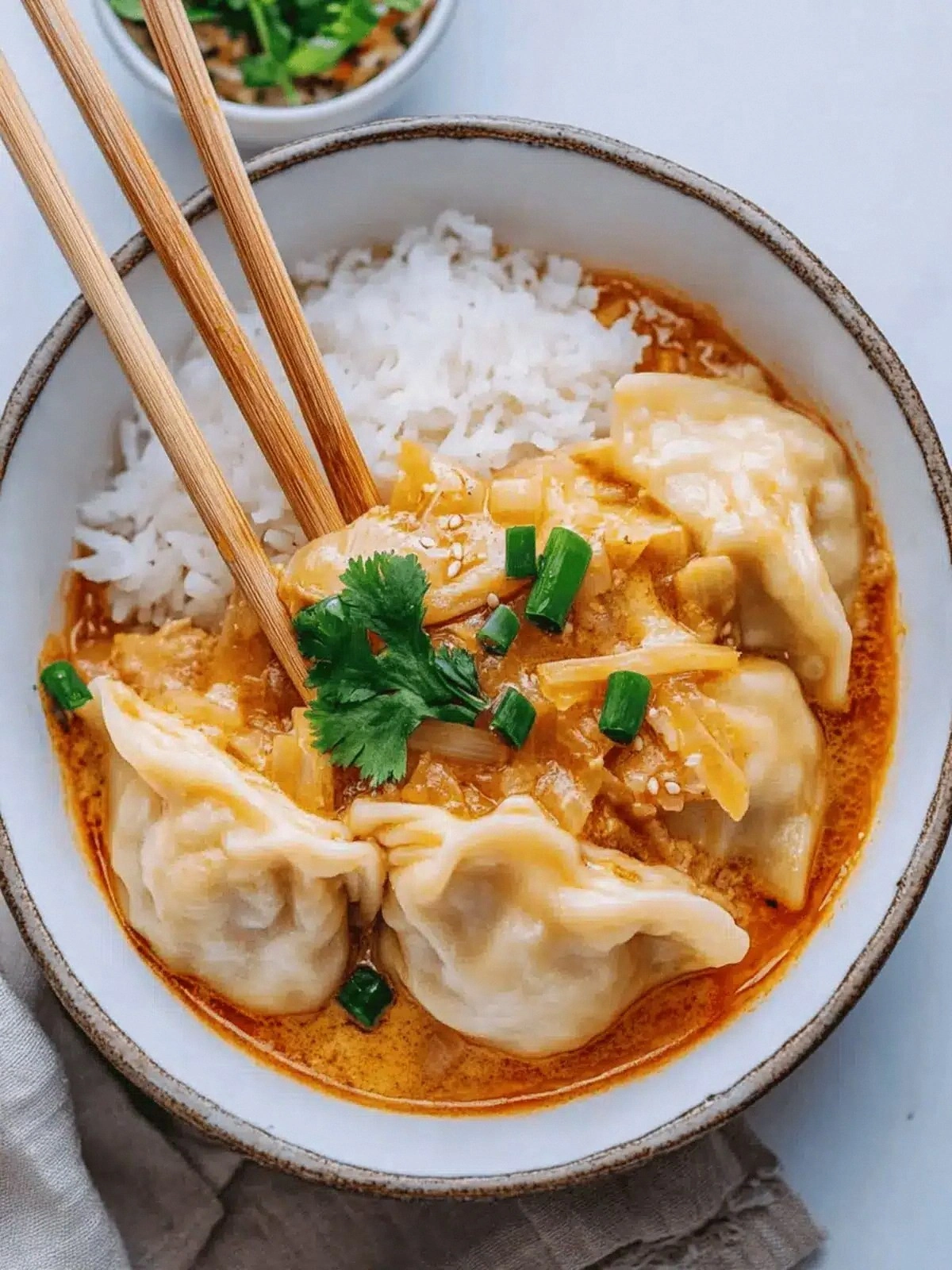
Picture the scene: a bright, sun‑lit kitchen, the clink of a stainless steel pot, the rhythmic hiss of coconut milk as it begins to thicken. The scent of ginger and garlic dances with the sweet, mellow notes of honey, while the gentle pop of steam creates a symphony of culinary anticipation. The visual cue is equally arresting—deep red curry paste swirling into a glossy, amber sauce, the translucent dumplings bobbing like tiny, savory boats on a sea of velvety broth. The texture feels almost cinematic: the dumplings’ tender wrappers, the crisped edges that shatter like thin ice when you bite, and the silky sauce that coats every bite like velvet. If you’ve ever struggled with bland dumplings or endless prep lists, you’re not alone—this is the fix you’ve been waiting for.
What makes this version stand out is that it’s a single, unassuming pan that does the heavy lifting, eliminating the need for separate sauté pans, steamer baskets, or a separate sauce pot. The sauce doesn’t just accompany the dumplings; it becomes the heart of the dish, infusing every bite with depth, heat, and a comforting richness that feels like a warm hug on a rainy night. I’ll be honest—I ate half the batch before anyone else got a taste—yet the sheer flavor complexity kept me coming back for more. Most recipes get this completely wrong by over‑cooking the dumplings or under‑seasoning the sauce; here, the balance is precise, the timing is exact, and the result is a dish that feels both comforting and adventurous.
Picture yourself pulling this out of the oven, the whole kitchen smelling incredible, the steam curling like a fragrant cloud. The first bite is a revelation—savory, slightly sweet, with a hint of heat that lingers, followed by the subtle crunch of fresh greens and the nutty whisper of sesame seeds. This is hands down the best version you’ll ever make at home. Let me walk you through every single step—by the end, you’ll wonder how you ever made it any other way.
What Makes This Version Stand Out
- Flavor: The creamy coconut milk base creates a silky backdrop that lets the fiery red curry paste shine, while a touch of honey balances the heat for a complex, layered taste.
- Texture: The dumplings are baked to a golden crisp on the outside, yet remain tender and juicy inside, offering a delightful contrast that feels almost cinematic.
- Simplicity: One pan, one pot, minimal cleanup—perfect for those nights when you want a gourmet meal without the extra dishes.
- Uniqueness: The addition of bok choy and zucchini not only boosts nutrition but also adds a fresh, vegetal crunch that keeps the dish from feeling heavy.
- Crowd Reaction: Friends who’ve tried this say it’s “the dumpling of the year”—a phrase that has spread across our group chat.
- Ingredient Quality: Using fresh ginger, garlic, and high‑quality soy sauce elevates the dish, turning a simple recipe into a flavor powerhouse.
- Cooking Method: Baking the dumplings in the sauce caramelizes the edges, creating a caramelized glaze that is both sweet and savory.
- Make‑Ahead Potential: The dish can be prepped the night before, frozen, and reheated with no loss of flavor or texture.
Alright, let’s break down exactly what goes into this masterpiece…
Inside the Ingredient List
The Flavor Base
Coconut milk is the star of this dish, providing a luscious, creamy texture that balances the heat of the red curry paste. The richness of coconut milk also helps mellow the sharpness of the garlic and ginger, creating a harmonious blend. If you can’t find coconut milk, a light evaporated milk will work, but the flavor profile will shift noticeably toward a milder, dairy‑based taste. For those who love a stronger coconut undertone, consider using full‑fat coconut milk; for a lighter version, opt for a 1% or skim alternative.
The red curry paste is where the dish gets its signature heat and depth. It’s a blend of red chilies, galangal, lemongrass, and aromatic spices that bring a complex, slightly sweet heat. If you’re new to curry paste, start with half the amount and taste as you go—this prevents the dish from becoming too spicy. A good tip: toast the curry paste in a dry skillet for a minute before adding coconut milk; this releases its essential oils and enhances the flavor.
Soy sauce adds umami, depth, and a subtle saltiness that balances the sweetness of honey. Opt for a low‑sodium version if you’re watching your salt intake, but remember to taste and adjust the seasoning accordingly. The soy sauce also helps in caramelizing the edges of the dumplings during baking, creating a delightful golden crust.
The Texture Crew
Rice vinegar brings a bright, acidic note that cuts through the richness of coconut milk, preventing the dish from feeling heavy. If you don’t have rice vinegar, a splash of white wine vinegar will work as a substitute. The acidity also helps the dumplings maintain a firm bite, preventing them from becoming soggy.
Honey or sugar provides a touch of sweetness that counterbalances the heat. While honey is more natural and adds subtle floral notes, sugar offers a cleaner, sharper sweetness. If you prefer a vegan version, replace honey with maple syrup or agave nectar; just keep in mind the flavor shift.
Sesame oil is a finishing oil that adds a nutty aroma and enhances the overall flavor profile. A few drops at the end of cooking will elevate the dish, but if you’re watching calories, you can reduce it to a tablespoon and still taste the difference.
The Unexpected Star
Fresh ginger and garlic are the aromatic foundation that makes this dish feel like a warm hug. The ginger adds a subtle peppery bite, while garlic offers a savory depth. If you’re not a fan of raw ginger, you can lightly sauté it before adding to the sauce, but keep it brief to preserve its bright flavor.
Frozen dumplings are the centerpiece. Using high‑quality frozen dumplings ensures they’re evenly cooked and have a consistent texture. If you’re in a pinch, fresh dumplings can be used, but they’ll require more prep time and a different cooking method.
The Final Flourish
Bok choy and zucchini add fresh, vegetal crunch that contrasts with the soft dumplings. Bok choy also brings a mild, slightly sweet flavor that pairs beautifully with the curry sauce. Zucchini, on the other hand, absorbs the sauce without becoming mushy if added at the right time.
Sesame seeds and green onions provide a nutty crunch and a pop of color that makes the dish visually appealing. The cilantro adds a bright, herby finish that lifts the entire flavor profile. If you’re allergic to sesame, simply omit the seeds; the dish will still be delicious.
Everything's prepped? Good. Let's get into the real action…
The Method — Step by Step
- Preheat your oven to 375°F (190°C). In a small saucepan, combine the coconut milk, red curry paste, soy sauce, rice vinegar, and honey. Bring to a gentle simmer over medium heat, stirring frequently, until the mixture thickens slightly and the curry paste is fully incorporated. The sauce should emit a fragrant, almost intoxicating aroma—this is the moment of truth. If the sauce is too thick, add a splash of water to reach your desired consistency.
- Finely mince the garlic and ginger, then sauté them in a tablespoon of sesame oil until fragrant, about 30 seconds. Add the sautéed aromatics to the simmering sauce, stirring to blend. This step unlocks the essential oils in the ginger and garlic, giving the sauce a deeper, more complex flavor profile.
- Place the frozen dumplings in a single layer in a large oven‑proof baking dish. Make sure they’re not touching each other, as this allows the edges to crisp up nicely. Drizzle the sauce evenly over the dumplings, ensuring each piece gets a generous coating. The sauce should cling to the dumplings like a glossy glaze.
- Add the bok choy and zucchini to the dish, arranging them around the dumplings. The bok choy should be folded into the sauce, while the zucchini slices should be positioned to soak up the liquid without becoming soggy. Sprinkle sesame seeds and sliced green onions over the top for added texture and flavor.
- Cover the baking dish tightly with aluminum foil and bake in the preheated oven for 25 minutes. The foil traps steam, allowing the dumplings to cook through while the sauce thickens. After 25 minutes, remove the foil, sprinkle cilantro on top, and return to the oven for an additional 10 minutes. This second baking period crisps the edges and caramelizes the sauce, creating that coveted golden crust.
- Remove from the oven and let the dish rest for 5 minutes before serving. This short resting period allows the sauce to set slightly, making it easier to scoop and ensuring each bite is packed with flavor. The steam will also condense, creating a moist, velvety texture that feels like a comforting hug.
- Serve the dumplings hot, garnished with a few extra cilantro leaves and a drizzle of sesame oil if desired. Pair with a side of jasmine rice or a crisp salad for a complete meal. The dish’s vibrant colors and aromatic steam will have your guests asking for the recipe immediately.
- If you’re a fan of extra heat, sprinkle a pinch of red pepper flakes before serving. Alternatively, add a splash of lime juice to brighten the flavors and add a tangy contrast to the rich sauce.
That’s it — you did it. But hold on, I’ve got a few more tricks that’ll take this to another level…
Insider Tricks for Flawless Results
The Temperature Rule Nobody Follows
Many home cooks think a lower oven temperature will keep the sauce from burning, but the truth is a hotter oven (around 375°F) ensures a crisp edge on the dumplings while keeping the interior moist. If you’re using a convection oven, lower the temperature by 25°F to prevent over‑cooking. Keep a close eye on the sauce; if it starts to brown too quickly, tent the dish with foil.
Why Your Nose Knows Best
Before you even lift the lid, trust your nose. The scent of caramelized soy sauce and toasted curry paste should be unmistakable. If the aroma feels flat, let the sauce simmer a bit longer to allow the flavors to meld. A well‑seasoned dish will have a complex bouquet that hints at sweetness, heat, and umami.
The 5-Minute Rest That Changes Everything
After baking, let the dish rest for exactly five minutes. This short pause allows the sauce to thicken and the dumplings to settle, preventing a watery mess when you serve. It also gives the flavors a chance to marry, creating a richer, more cohesive taste experience.
Stirring Technique for Even Cooking
When you first pour the sauce over the dumplings, give the dish a gentle shake to ensure even coating. A quick, circular motion will help the sauce reach every nook and cranny, especially around the edges of the dumplings where the caramelization is most crucial.
Finishing Touches for Extra Flavor
A final drizzle of sesame oil before serving adds a nutty aroma that elevates the dish. If you’re feeling adventurous, finish with a sprinkle of toasted sesame seeds for added crunch. These small touches transform a good dish into an unforgettable experience.
Creative Twists and Variations
This recipe is a playground. Here are some of my favorite ways to switch things up:
Spicy Thai Twist
Swap the red curry paste for green curry paste and add a handful of Thai bird chilies. The result is a greener, slightly sweeter heat that feels like a tropical getaway.
Vegan Delight
Replace the soy sauce with tamari, use maple syrup instead of honey, and ensure your dumplings are vegan. The dish remains rich and comforting, with a completely plant‑based profile.
Protein‑Packed Variation
Add diced tofu or shrimp to the sauce before baking. The protein absorbs the curry flavors, creating a hearty, satisfying main course.
Low‑Carb Option
Omit the zucchini and replace the coconut milk with a low‑fat coconut milk alternative. Pair with cauliflower rice for a low‑carb, high‑protein meal that still feels indulgent.
Breakfast Edition
Serve the dumplings over a bed of scrambled eggs and top with a fried egg for a savory breakfast. The sauce’s richness pairs beautifully with the creamy eggs.
Weekend Brunch
Add a handful of fresh spinach and a splash of lemon juice before baking. The bright, fresh flavors elevate the dish into a brunch‑worthy delight.
Storing and Bringing It Back to Life
Fridge Storage
Cool the dish completely before covering tightly with plastic wrap. Store in the refrigerator for up to 3 days. Reheat gently in the oven at 350°F for 10 minutes, or in a microwave for 2 minutes, until steaming hot.
Freezer Friendly
Divide the dish into individual portions and wrap each tightly with foil. Freeze for up to 2 months. Thaw overnight in the refrigerator, then reheat as described above.
Best Reheating Method
Add a splash of water or coconut milk before reheating to keep the sauce from drying out. Reheat in a skillet over medium heat, stirring occasionally, until the sauce reaches a silky consistency. This trick restores the dish’s original mouthfeel and aroma.