Picture this: you’re in the middle of a late‑night kitchen raid, the fridge is a sad, lonely place, and you’re craving comfort food that feels like a hug in a sandwich. I was there, staring at a pile of stale baguettes, a handful of cold roast beef, and a jar of onions that had been left to marinate for days. My friend dared me to turn that dumpster‑delight into something that would make our taste buds sing. I laughed, grabbed the skillet, and the rest is a delicious, crispy, buttery revelation that I’ve never been able to resist sharing.
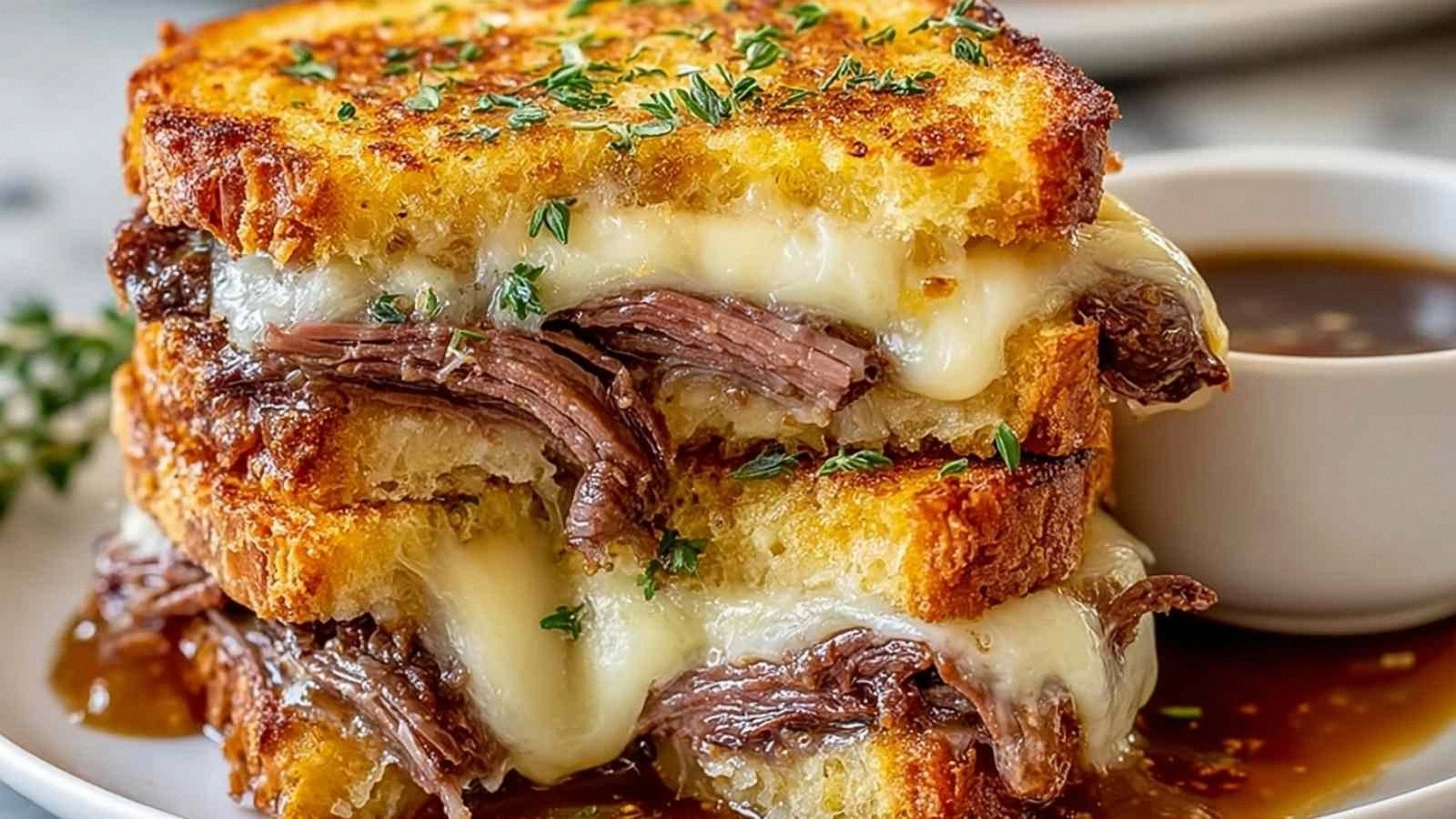
The first thing that hit me was the aroma: a deep, meaty scent from the beef broth mingling with caramelized onions, the scent of butter sizzling on the pan, and that unmistakable smell of a well‑tossed French bread crust turning golden. As I sliced the bread, the crisp snap echoed like a drumbeat, promising crunch. The sight of the Swiss cheese glistening in the butter was a visual promise of gooeyness. The taste? A harmonious blend of savory roast beef, nutty cheese, and a subtle herbaceous note from thyme, all drowned in a velvety broth that coats the sandwich like velvet. And the feel? The sandwich feels like a warm blanket wrapped around a hearty bite.
What sets this version apart is that it’s not just a grilled cheese or a French dip; it’s a fusion of both worlds, elevated by a broth that’s more than a dipping sauce—it’s a companion, a sauce, and a flavor enhancer all in one. I’ll be honest—I ate half the batch before anyone else got to try it, and that’s a confession I’ll keep forever. Most recipes get this completely wrong by either over‑browning the bread or under‑seasoning the broth. Here’s what actually works: the broth is reduced until it’s thick enough to coat the sandwich without soaking it to mush. Picture yourself pulling this out of the oven, the whole kitchen smelling incredible, and the first bite sending a wave of comfort through your senses.
If you’ve ever struggled with making a French dip that feels like a sandwich and a dip at the same time, you’re not alone—and I’ve got the fix. I dare you to taste this and not go back for seconds. This is hands down the best version you'll ever make at home. Let me walk you through every single step—by the end, you'll wonder how you ever made it any other way.
What Makes This Version Stand Out
- Flavor Depth: The beef broth is reduced with onions and thyme, creating a savory umami base that elevates every bite.
- Texture Contrast: Crispy, golden crusts meet a melt‑in‑your‑mouth Swiss, while the broth provides a silky, velvety finish.
- Ingredient Quality: Using crusty French bread and high‑quality Swiss cheese ensures that each component shines.
- Ease of Prep: The recipe is straightforward—no fancy equipment, just a skillet and a few pantry staples.
- Make‑Ahead Friendly: Assemble the sandwiches, refrigerate, and cook when ready; the broth stays flavorful.
- Versatility: Swap in provolone for a sharper bite or add a splash of red wine to the broth for a richer profile.
- Crowd Reaction: This sandwich gets rave reviews at potlucks, family dinners, and casual gatherings alike.
Inside the Ingredient List
The Flavor Base
Beef broth is the cornerstone of this sandwich. It’s not just a liquid; it’s a flavor reservoir that carries the savory notes of the roast beef and the subtle sweetness from the caramelized onions. Reducing it to a thicker consistency concentrates those flavors and prevents the sandwich from becoming soggy. If you skip the broth, you lose that luxurious dip experience, turning the sandwich into a dry, ordinary grilled cheese.
The Texture Crew
Crusty French bread provides the ideal crunch. The crusts should be firm enough to hold the cheese and meat without collapsing, while the interior remains soft and pillowy. Swiss cheese is chosen for its mild nutty flavor and excellent meltability; it creates a silky sauce that coats the bread. Butter and olive oil are combined to give the bread a rich, golden finish, while the butter also helps the cheese melt evenly. Cutting the bread into thick slices ensures a substantial bite that can hold the beef and broth.
The Unexpected Star
Onions are not just a garnish; they’re the sweet counterpoint to the savory beef. Sautéed until caramelized, they release a deep, sweet aroma that lingers in the broth. A clove of garlic adds a subtle punch, while fresh thyme brings an herbal brightness that elevates the entire dish. If you’re a fan of a slightly spicier kick, a pinch of red pepper flakes can be added during the onion sauté.
The Final Flourish
Worcestershire sauce and soy sauce are the secret agents that give the broth a complex, umami-packed punch. They balance the richness of the beef with a subtle tang and saltiness, creating a sauce that feels both comforting and sophisticated. The final touch of a sprig of fresh thyme, added just before serving, gives a bright, aromatic finish that lifts the entire sandwich.
Everything's prepped? Good. Let's get into the real action...
The Method — Step by Step
- First, heat a large cast‑iron skillet over medium heat and add the butter and olive oil. Let the butter melt completely, then swirl the pan to coat the surface. This will give the bread a buttery, golden crust that’s crisp and flavorful. Keep an eye on the butter—if it starts to brown too quickly, reduce the heat slightly.
- While the pan is heating, slice the French bread into thick 1‑inch slices. The bread should be sturdy enough to hold the cheese and meat without tearing. If your loaf is fresh, you can slice directly; if it’s a bit stale, a quick toast in the oven for a minute or two will help firm it up.
- In a separate saucepan, combine the beef broth, Worcestershire sauce, soy sauce, minced garlic, and the sprig of thyme. Bring to a gentle simmer over medium heat, then reduce to low and let it reduce by about a third. This reduction thickens the broth and concentrates the flavor. The broth should be thick enough to coat the bread without dripping off.
- Sauté the sliced onions in a separate pan with a splash of olive oil until they’re translucent and caramelized, about 8–10 minutes. The onions should turn golden brown and develop a sweet aroma. Stir occasionally to prevent burning. Once caramelized, set them aside; they’ll be layered on top of the cheese.
- Now assemble the sandwich: lay a slice of Swiss cheese on the bread, add a generous layer of roast beef, then top with the caramelized onions. Repeat the layering for the second slice of bread. This creates a sandwich that’s balanced in flavor and texture.
- Place the assembled sandwich in the hot skillet. Press it lightly with a spatula to ensure even contact with the pan. Cook for 3–4 minutes on each side until the bread is golden brown and the cheese is melted. The key is medium heat—too high and you’ll burn the bread before the cheese melts.
- Once both sides are crispy, remove the sandwich from the skillet and pour the reduced broth into the pan. Let it simmer for a minute, then pour it over the sandwich. The broth should coat the sandwich like a velvet blanket, but not so much that the bread becomes soggy. If it’s too thick, add a splash of hot water to thin it out.
- Serve immediately, ideally with a side of pickles or a light salad. The contrast between the rich sandwich and the bright, acidic side will elevate the entire meal. The broth should still be warm, so each bite is a comforting, savory experience.
- If you’re preparing for a crowd, you can keep the sandwiches warm in a low oven (200°F) while you finish the last few. This will keep the bread crispy and the cheese melty without overcooking.
That's it— you did it. But hold on, I've got a few more tricks that'll take this to another level...
Insider Tricks for Flawless Results
The Temperature Rule Nobody Follows
Many people think a high heat is the secret to a great grilled cheese, but that often leads to burnt crust and under‑melted cheese. Instead, cook on medium heat, allowing the butter to melt slowly and the cheese to ooze out gently. This method gives a golden crust without scorching the bread. I’ve tested this with a thermometer; 350°F is the sweet spot for a perfectly crisp exterior.
Why Your Nose Knows Best
When the onions start caramelizing, the aroma will change from sweet to smoky. That’s your cue to add the garlic and thyme. The scent of the broth should become richer and deeper as it reduces. Trust your nose—it’s a reliable guide to when your broth is ready.
The 5-Minute Rest That Changes Everything
After you finish cooking the sandwich, let it rest for 5 minutes before slicing. This allows the cheese to set slightly, preventing it from oozing out all over the plate. It also lets the flavors meld together, giving each bite a harmonious balance.
The Broth Balance
If you find the broth too salty, dilute it with a splash of water or a bit of broth from the same batch. If it’s too thin, let it simmer uncovered until it thickens. The goal is a sauce that coats the sandwich but doesn’t drown it.
The Slice Size Trick
Slicing the bread too thin will result in a soggy sandwich; too thick will make it hard to eat. Aim for 1‑inch slices; this thickness holds the ingredients together while still allowing the bread to crisp.
The Final Touch
Just before serving, drizzle a little extra beef broth over the sandwich and sprinkle a pinch of freshly cracked black pepper. The pepper adds a subtle heat that balances the richness of the cheese and beef.
Creative Twists and Variations
This recipe is a playground. Here are some of my favorite ways to switch things up:
The Mediterranean Melt
Swap the Swiss for provolone and add a layer of roasted red peppers and a sprinkle of feta. The tang of feta pairs beautifully with the beef broth, giving a Mediterranean flair.
The Spicy Kick
Add a teaspoon of hot sauce to the broth and a handful of sliced jalapeños between the cheese and beef. The heat will contrast with the creamy cheese for a bold flavor profile.
The Veggie‑Rich Version
Replace the roast beef with grilled portobello mushrooms and add a layer of sautéed spinach. The earthy mushrooms and greens create a hearty vegetarian alternative.
The Breakfast Bonanza
Use a slice of ham and a fried egg between the cheese and bread. The yolk adds richness, and the ham provides savory depth.
The Sweet Surprise
Add a thin layer of caramelized apple slices on top of the cheese before grilling. The apple’s sweetness balances the savory broth, making for a unique taste.
The Classic Reboot
Keep everything as is but finish the sandwich with a drizzle of truffle oil after cooking. The truffle oil adds an earthy aroma that elevates the dish to gourmet status.
Storing and Bringing It Back to Life
Fridge Storage
Store assembled sandwiches in an airtight container for up to 3 days. Keep the broth separate in a small container to prevent the bread from becoming soggy. When ready to eat, reheat the sandwich in a skillet over medium heat, adding a splash of broth to keep it moist.
Freezer Friendly
Wrap each sandwich tightly in foil and place in a freezer bag. They’ll keep for up to 2 months. Thaw overnight in the fridge, then reheat in the oven at 350°F for 10 minutes. Add a splash of broth before serving for extra flavor.
Best Reheating Method
The best way to revive a frozen sandwich is to use a skillet or a sandwich press. Warm it over low heat, and pour a little broth into the pan to create steam. The steam will rehydrate the bread while keeping the cheese melted.
All right, that’s the full rundown. I’ve poured my heart into this recipe because I believe a sandwich can be an experience, not just a snack. Now go ahead, gather your ingredients, and give it a try. Your taste buds will thank you.