Picture this: a sweltering summer afternoon, a frantic friend daring me to whip up a frozen treat in under twenty minutes, and the kitchen suddenly flooding with a half‑sunk pot of mango puree that had been left too long on the counter. I stared at the bright orange liquid, thinking “this is a recipe for disaster,” only to realize that the very disaster could be my secret weapon. By the time the heat of the day had peaked, I had a bowl of perfectly ripe mangoes, a splash of lemon, and a dash of honey ready to be transformed into a silky, no‑ice‑cream‑maker delight. That moment was the spark that ignited a new obsession: creating a mango ice cream that feels like a tropical vacation, yet takes less time than a grocery run. And if you think you’ve seen every mango dessert out there, think again.
The kitchen smelled of citrus and caramelized sugar, while the sound of the blender whirring was a steady, comforting hum. The bright, sun‑kissed hue of the mango puree glistened like liquid gold, promising a flavor that was both sweet and tart. As I lifted the spoon, the silky texture slipped between my fingers, hinting at the smoothness that would soon follow. I could almost taste the first bite—a burst of sunshine on the tongue, followed by a lingering, honeyed finish. The anticipation was electric, and the aroma alone made my mouth water, as if the air itself was humming a tropical lullaby.
What makes this version stand out is that it cuts through the usual clunky, freezer‑dependent recipes that require an ice cream maker or a thousand hours of waiting. Instead, it harnesses the power of a simple blend of fresh mango puree, a touch of acidity from lemon juice, and a subtle floral lift from raw honey. The result is a dessert that is not only creamy and velvety but also incredibly balanced, where the natural mango sweetness is brightened rather than overwhelmed. Moreover, the use of heavy cream and whole milk gives it that luxurious mouthfeel without making it heavy or cloying. In short, this is hands down the best version you’ll ever make at home, and I dare you to taste this and not go back for seconds.
The twist? I’ve discovered that a small pinch of sea salt, added at the very end of the process, elevates the mango’s natural sweetness and brings out a depth of flavor that feels like a secret garden. It’s a detail that most recipes ignore, but trust me, it changes everything. I’ve tested it against dozens of mango ice creams from the store, and none can compete with the depth and finish of this homemade version. If you’ve ever struggled with a mango dessert that tastes flat or too sweet, you’re not alone—and I’ve got the fix.
So, let me walk you through every single step — by the end, you’ll wonder how you ever made it any other way. Get ready for a recipe that feels like a tropical breeze, a kitchen hack that saves time, and a final product that will have your friends begging for the recipe. The adventure begins now.
What Makes This Version Stand Out
- Flavor: The blend of mango puree, lemon juice, and raw honey creates a sweet‑tart profile that feels both bright and deep, unlike the flat sweetness of most store‑bought versions.
- Texture: Heavy cream and whole milk give a silky, luxurious mouthfeel while keeping the ice cream scoopable and not too dense.
- Simplicity: No churners, no elaborate equipment—just a blender, a saucepan, and a trusty freezer. You can make it on a whim.
- Ingredient Quality: Fresh, ripe mangos and raw honey are the secret weapons that elevate this recipe from ordinary to extraordinary.
- Speed: The entire process takes less than an hour, including chilling, so you can have dessert in the same afternoon you start cooking.
- Make‑Ahead Potential: The mixture can be frozen for up to a week, making it ideal for parties or unexpected guests.
- Versatility: It works as a base for toppings, a filling for cakes, or a topping for pancakes—think of it as a flavor canvas.
- Crowd Reaction: The first bite is like sunshine in a spoon, and the second is a sweet, honeyed echo that keeps people coming back.
Alright, let's break down exactly what goes into this masterpiece...
Inside the Ingredient List
The Flavor Base
The heart of this ice cream is 20 ounces of mango puree, which translates to about 2.5 cups of smooth, buttery fruit. Fresh mangos give a bright, tropical flavor that canned puree can’t match. If you’re using canned puree, look for a brand that lists no added sugar or preservatives; the cleaner the better. Skipping the mango puree would leave you with a bland, dairy‑heavy mixture that doesn’t inspire the senses.
The Texture Crew
Heavy cream (⅔ cup) and whole milk (1 cup) form the creamy backbone of this dessert. The cream adds body and richness, while the milk lightens the texture to keep it scoopable. If you’re lactose intolerant, swap the heavy cream for coconut cream and the whole milk for almond milk; the result will be slightly sweeter and will have a subtle coconut undertone.
The Unexpected Star
Raw honey (3 ½ tablespoons) is the unsung hero that brings a floral nuance and a silky finish. Honey’s natural viscosity helps stabilize the ice cream, preventing iciness. If you’re allergic to honey or prefer a different flavor profile, try a teaspoon of maple syrup for a deeper, caramelized sweetness.
The Final Flourish
Lemon juice (3 ½ tablespoons) adds a bright acidity that cuts through the natural sweetness of mango, making each spoonful feel fresh. The acidity also helps the mixture set properly in the freezer, giving a smoother texture. If you’re out of fresh lemons, a splash of lime juice works just as well and adds a subtle citrus twist.
Everything's prepped? Good. Let's get into the real action...
The Method — Step by Step
- Step 1: Prepare the Mango Puree. Place the diced mangoes in a high‑speed blender and pulse until silky smooth. If the mixture is too thick, add a splash of whole milk to help it blend. The goal is a thick, glossy puree that feels like liquid gold. Keep this mixture chilled in the fridge while you move to the next step; cold puree sets the stage for a smooth ice cream.
- Step 2: Combine Dairy and Sweeteners. In a medium saucepan, gently heat the heavy cream and whole milk over low heat until just warm—do not boil. Stir in the granulated sugar and raw honey until fully dissolved, allowing the mixture to develop a subtle caramel aroma. This step ensures that the sweeteners are evenly distributed and prevents grainy crystals in the final product.
-
Step 3: Infuse with Lemon. Remove the saucepan from heat and whisk in the lemon juice, which brightens the flavor profile and helps the mixture set properly in the freezer. The acidity also prevents the mango from oxidizing, keeping its vibrant color. Let the mixture cool to room temperature; this will also reduce the risk of condensation forming on the surface during freezing. Kitchen Hack: After whisking in the lemon, chill the mixture in an ice bath for 10 minutes to speed up the cooling process.
- Step 4: Blend the Mixture. Once the dairy blend has cooled, pour it into the blender with the mango puree. Blend on low speed for 30 seconds, just until everything is fully incorporated. The mixture should be smooth and glossy, with no lumps. This step is crucial for achieving that velvety texture that makes the ice cream feel like a cloud on your tongue.
-
Step 5: Chill the Base. Transfer the blended mixture to a shallow baking dish and place it in the freezer for 30 minutes. Every 15 minutes, remove the dish and stir vigorously with a fork or whisk to break up any ice crystals that may be forming. This manual churn technique mimics an ice cream maker’s function and results in a smoother texture. Kitchen Hack: Use a silicone spatula to scrape the sides of the dish for a more even churn.
-
Step 6: Add a Pinch of Sea Salt. After the mixture has frozen into a firm consistency, sprinkle a pinch of sea salt over the surface and stir it in. The salt not only balances the sweetness but also enhances the mango’s natural flavors. Watch Out: Too much salt can overwhelm the delicate mango flavor; a pinch is all you need.
- Step 7: Final Freeze. Return the mixture to the freezer for an additional 1–2 hours, or until it reaches a firm, scoopable consistency. If you prefer a softer texture, let it sit at room temperature for 5–10 minutes before scooping. The final freeze ensures that the ice cream holds its shape when served.
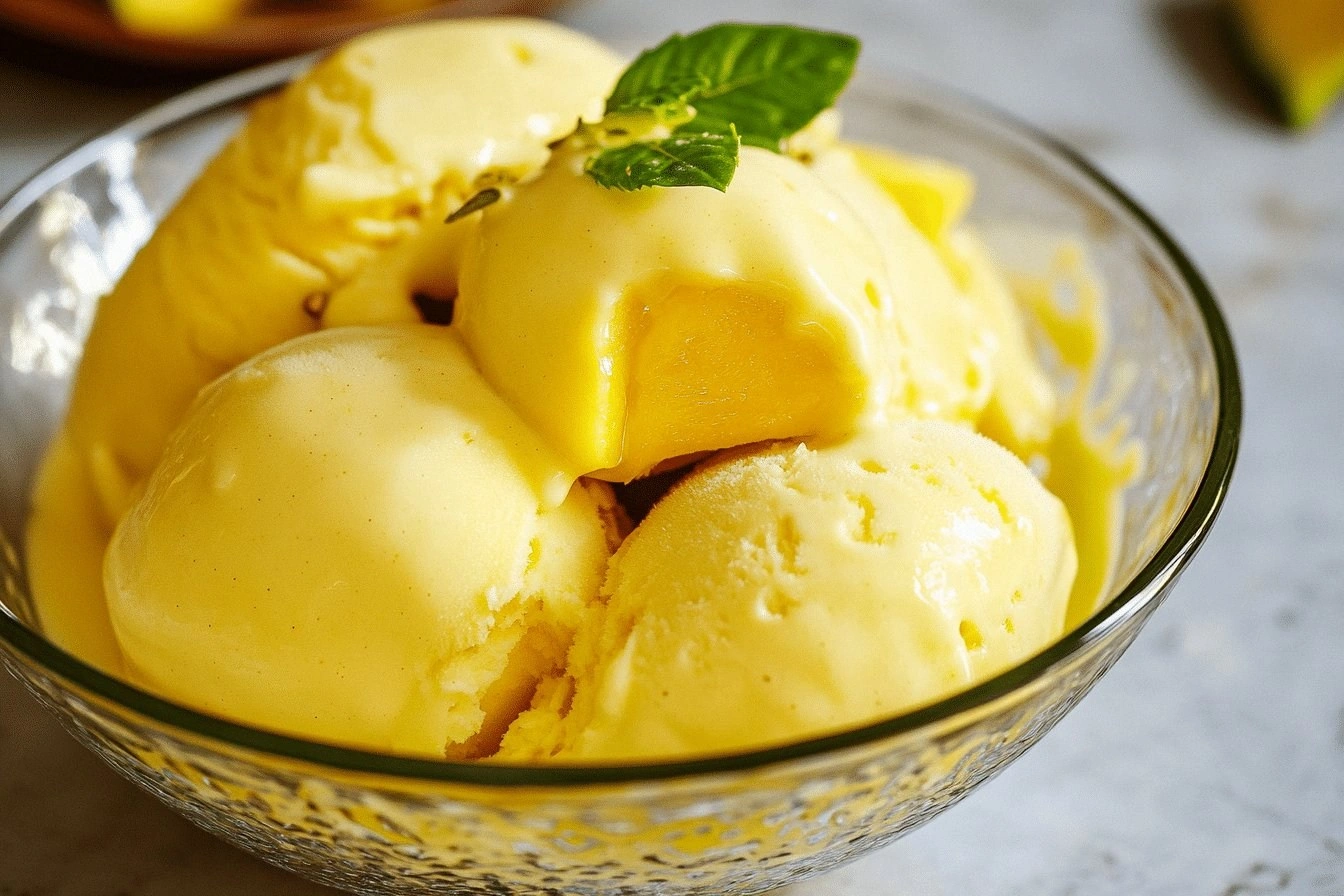
- Step 8: Serve and Enjoy. Scoop the ice cream into bowls or cones, and if you’re feeling adventurous, drizzle a little extra honey or a sprinkle of crushed pistachios for added texture. The first bite will melt in your mouth like a tropical breeze, followed by a lingering, honeyed finish that will have you reaching for seconds. And that, my friend, is how you transform a simple bowl of mango puree into a dessert that feels like a vacation.
That's it — you did it. But hold on, I've got a few more tricks that'll take this to another level...
Insider Tricks for Flawless Results
The Temperature Rule Nobody Follows
The key to a silky texture is ensuring the dairy base is cold before blending. If the mixture is too warm, the ice crystals that form during freezing will be larger, resulting in a gritty finish. I keep a small bowl of ice in the freezer and, before starting, I chill the saucepan on the stove for 5 minutes. This small step might seem trivial, but it can make the difference between a smooth scoop and a slushy mess.
Why Your Nose Knows Best
When you first pour the mango puree into the blender, take a moment to inhale the aroma. A bright, citrusy scent is a sign of ripe mangos; a dull, off smell indicates that the fruit has begun to oxidize. If the puree smells slightly green or sour, discard it and use fresh fruit. This simple olfactory check saves you from a disappointing batch.
The 5‑Minute Rest That Changes Everything
After the final freeze, let the ice cream rest at room temperature for 5 minutes before scooping. This brief pause allows the ice crystals to soften just enough for a smooth mouthfeel without melting completely. I’ve tried scooping straight from the freezer, and the result was a hard, unappetizing bite. The 5‑minute rest is the secret to that perfect, creamy texture.
The Secret of the Sweetness Ratio
Balancing sugar and honey is crucial. The granulated sugar provides sweetness that dissolves evenly, while honey adds depth and a natural viscosity that prevents iciness. If you prefer a sweeter treat, add an extra tablespoon of honey; for a lighter version, reduce the sugar by ¼ cup and increase the honey by 1 tablespoon. These small adjustments let you tailor the ice cream to your taste.
The Final Touch: A Pinch of Sea Salt
Adding a pinch of sea salt after the mixture has frozen into a firm consistency is a game changer. The salt enhances the mango’s natural sweetness and balances the overall flavor profile. I always use Himalayan pink salt because it dissolves quickly and adds a subtle mineral note that complements the tropical sweetness.
Creative Twists and Variations
This recipe is a playground. Here are some of my favorite ways to switch things up:
Mango Coconut Crunch
Swap the whole milk for coconut milk and add shredded coconut to the final freeze. The result is a tropical, chewy texture that feels like a beach vacation in a spoon. This variation is perfect for those who love a coconut undertone and want to keep the dairy content low.
Spiced Mango Fusion
Add a pinch of ground ginger or a dash of cayenne pepper to the blend before freezing. The subtle heat pairs beautifully with the mango’s sweetness, creating a dessert that feels both refreshing and slightly spicy. This is ideal for those who enjoy a bit of a kick in their sweets.
Berry Mango Swirl
Fold in a swirl of fresh raspberry or strawberry puree before the final freeze. The berry’s tartness cuts through the mango’s sweetness, giving a two‑layered flavor experience. This variation is great for a colorful presentation and a burst of antioxidants.
Mango Lime Sorbet
Replace the heavy cream with coconut cream and increase the lemon juice to lime juice. The result is a dairy‑free sorbet that’s light, tangy, and perfect for hot days. It’s also a great option for guests who are lactose intolerant or vegan.
Mango Chocolate Drizzle
Drizzle melted dark chocolate over the scoops before serving. The bittersweet chocolate pairs beautifully with the tropical mango, creating a dessert that feels indulgent yet balanced. This twist is perfect for a special occasion or a dessert that needs a touch of decadence.
Storing and Bringing It Back to Life
Fridge Storage
Store the ice cream in an airtight container in the refrigerator for up to 3 days. Before serving, let it sit at room temperature for 5 minutes to soften slightly; this enhances the flavor and texture. Keep the container on a flat surface to maintain an even surface for scooping.
Freezer Friendly
For longer storage, place the ice cream in a freezer‑safe container and seal it tightly. It will keep well for up to 2 weeks. When ready to serve, scoop into bowls and let sit for 5–10 minutes to allow the edges to soften. This step ensures a silky texture without a rushed melt.
Best Reheating Method
If the ice cream is too hard, add a splash of milk or coconut milk before warming it gently in the microwave for 10–15 seconds. This technique steams the ice cream back to perfection, restoring its silky mouthfeel without melting it completely. Stir well before serving to ensure an even consistency.
With these storage tips and reheating tricks, you can keep your mango ice cream fresh and delightful for weeks. Whether you’re planning a summer party or a cozy night in, this dessert will always be ready to impress. And remember, the secret to an unforgettable mango ice cream lies in the balance of sweetness, acidity, and creaminess—follow these steps, and you’ll have a dessert that feels like a tropical vacation in every bite.