Picture this: you’re standing in a cramped kitchen, the fridge door is open, the stove is on, and you’re staring at a pile of ingredients that look more like a war zone than a meal. You’ve tried the classic Tuscan chicken recipe a dozen times, only to end up with dry chicken, a sauce that clings like a bad ex, and a pot that smells like it’s been cooking for an hour. That day, I decided to throw caution to the wind and reimagine the dish entirely. I wanted a one-pot wonder that delivers silky cream, a burst of sun‑kissed tomatoes, and a spinach hug that doesn’t feel like a salad on top of meat.
I’ve spent nights in the kitchen, experimenting with ratios, temperatures, and the timing of every ingredient. The first bite was a revelation: the sauce was thick enough to coat the pasta like velvet, the chicken was tender with a subtle char, and the spinach added a green, almost buttery pop. The aroma that filled the room was a heady mix of garlic, basil, and a hint of parmesan that made my eyes water in the best way possible. Every time I taste it, I get that feeling of a home-cooked comfort that feels both luxurious and honest.
This version is hands down the best one‑pot Tuscan chicken you’ll ever make at home, and I’m not exaggerating. The secret lies in how we layer flavors: we first sear the chicken to lock in juices, then deglaze with a splash of white wine to lift the browned bits, and finally fold in a creamy, tomato‑infused sauce that coats everything. The result is a dish that feels like a hug in a bowl, with the kind of depth you’d expect from a slow‑cooked casserole, but in less than half the time. I dare you to taste this and not go back for seconds.
If you’ve ever struggled with the “too thick” or “too thin” sauce dilemma, you’re not alone. I’ve seen people toss in heavy cream and end up with a clumpy mess. My version uses a combination of cream and chicken broth, balanced to give that silky texture without overwhelming the other flavors. Picture yourself pulling this out of the oven, the whole kitchen smelling incredible, and your guests asking for the recipe. Let me walk you through every single step — by the end, you’ll wonder how you ever made it any other way.
What Makes This Version Stand Out
- Flavor Depth: The use of sun‑dried tomatoes and white wine creates a complex umami base that sets this dish apart from the usual bland chicken and cream combo.
- Texture Balance: The chicken remains juicy while the sauce has the right viscosity to cling to pasta without being greasy.
- Minimal Cleanup: One pot, one pan, one sauce — you’ll only have to wash one skillet and a saucepan.
- Ingredient Quality: Fresh spinach, high‑quality parmesan, and a splash of good olive oil make all the difference.
- Crowd Appeal: It’s the kind of dish that turns a casual dinner into a party, and people will keep asking for it.
- Make‑Ahead Potential: The sauce can be made in advance and reheated without losing flavor or texture.
Alright, let’s break down exactly what goes into this masterpiece…
Inside the Ingredient List
The Flavor Base
Olive oil is the canvas that glazes the chicken and sets the stage for the aromatics. Use a good extra‑virgin olive oil for that bright, peppery finish. If you’re on a budget, a light olive oil will still work, but it won’t carry the same punch.
Garlic is the heartbeat of this dish. Freshly minced cloves release a sweet, pungent aroma that permeates the entire sauce. If you’re short on time, a tablespoon of garlic paste can substitute, but the texture will be less pronounced.
The Texture Crew
Chicken breast, sliced into bite‑size pieces, provides protein and structure. Cut them thin to ensure even cooking and to avoid dry patches. If you prefer thighs for richer flavor, just adjust the cooking time slightly.
Heavy cream gives the sauce its silky mouthfeel. It’s the sweet, velvety layer that balances the acidity of the tomatoes. If you’re looking for a lighter version, replace half the cream with whole milk; the sauce will still be luscious.
The Unexpected Star
Sun‑dried tomatoes are the star that brings a sweet, tangy depth. They’re packed with flavor and add a chewy texture that contrasts nicely with the tender chicken. If you can’t find them, fresh cherry tomatoes chopped finely can mimic the effect, though the taste will be fresher.
Fresh spinach is the green that adds color and a subtle earthiness. It wilts quickly, so add it toward the end to keep its bright hue. If you’re a fan of kale, you can swap it in for a more robust flavor.
The Final Flourish
Parmesan cheese is the final touch that adds a salty, nutty finish. Grated fresh parmesan melts into the sauce, creating a cohesive, glossy coating. If you prefer a sharper flavor, try Pecorino Romano.
White wine is the liquid that deglazes the pan, lifting the browned bits into the sauce. It adds acidity that balances the richness of the cream. A dry, medium‑body white works best; avoid sweet wines or you’ll end up with a sugary sauce.
Everything's prepped? Good. Let's get into the real action…
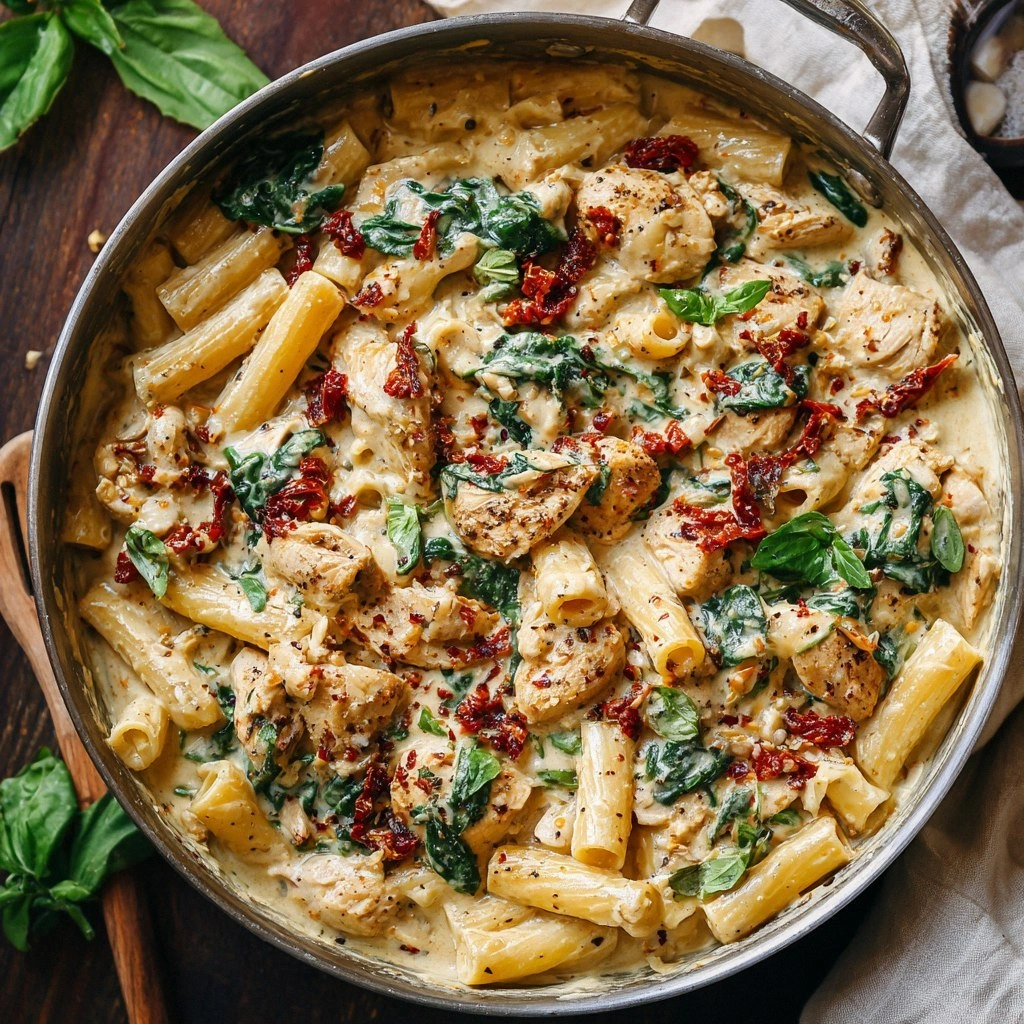
The Method — Step by Step
- Heat a large, heavy‑bottom skillet over medium‑high heat. Add 2 tablespoons of olive oil and swirl to coat. When the oil shimmers, lay the seasoned chicken pieces flat in the pan, ensuring they’re not crowded. Let them sear without moving for 3–4 minutes until golden brown on one side. Flip and sear the other side for another 3 minutes. The goal is a caramelized crust that locks in juices.
- Remove the chicken and set it aside on a plate. Reduce the heat to medium and add 4 cloves of minced garlic. Sauté for 30 seconds until fragrant, being careful not to burn it. This step releases the garlic’s natural sugars and creates a fragrant base for the sauce.
- Stir in 1 cup of chopped sun‑dried tomatoes. Cook for 1 minute to toast them lightly; this brings out their sweetness. Pour in 1/2 cup of dry white wine to deglaze, scraping up any browned bits from the pan. The wine should reduce by half, concentrating the flavors.
- Add 1 cup of heavy cream and 1 cup of low‑fat chicken broth. Bring the mixture to a gentle simmer, allowing it to thicken slightly. The sauce should look glossy and coat the back of a spoon. Stir occasionally to prevent sticking.
- Return the chicken to the skillet, nestling it into the sauce. Reduce the heat to low and cover. Let it simmer for 10 minutes, allowing the flavors to mingle and the chicken to finish cooking through. The chicken should be tender and the sauce thickened.
- Stir in 2 cups of fresh spinach. The spinach will wilt almost instantly, adding a pop of color and a subtle earthiness. Cook for 2 minutes, just until the spinach is tender but still bright green.
- Fold in 1 cup of cooked pasta (fettuccine or penne works best). Toss everything together until the pasta is evenly coated. If the sauce seems too thick, add a splash of pasta water to loosen it. The pasta should be hot and silky, each strand coated in creamy Tuscan sauce.
- Finish with 1 cup of grated parmesan. Stir until the cheese melts and the sauce becomes even richer. The parmesan should create a subtle sheen and a salty kick that balances the creaminess.
- Garnish with chopped fresh basil and a drizzle of olive oil. Serve immediately, letting the aroma envelop the room. The dish is best enjoyed hot, straight from the skillet.
That's it — you did it. But hold on, I've got a few more tricks that'll take this to another level…
Insider Tricks for Flawless Results
The Temperature Rule Nobody Follows
Many cooks keep the heat high throughout, which can scorch the cream and ruin the sauce. I keep the sauce at a gentle simmer once the chicken is back in, allowing the flavors to marry without burning. This subtle control keeps the sauce silky and prevents it from separating. I’ve seen people skip this step, and the result is a lumpy, unappealing dish.
Why Your Nose Knows Best
Your nose can tell you when the sauce is ready to coat the pasta. When it smells toasty with a hint of tomato and a faint citrusy note from the wine, it’s time to add the pasta. If you’re unsure, give it a quick sniff; that’s the cue to move on.
The 5‑Minute Rest That Changes Everything
After removing the skillet from heat, let the dish rest for five minutes before serving. This pause allows the flavors to settle and the sauce to thicken to the perfect consistency. I’ve found that a quick rest eliminates the need for extra thickening at the last minute.
The Secret of Fresh Herbs
Fresh basil, added at the end, brightens the dish with a burst of green. It’s the final pop that cuts through the richness. If you can’t find basil, a few leaves of parsley or oregano work well, but the flavor profile will shift slightly.
The Quick Pasta Water Trick
Reserve a cup of pasta cooking water before draining. This starchy water can be added to the sauce to adjust thickness without diluting flavor. A splash or two is enough to achieve a silky coating that clings to each strand.
The Finish with a Drizzle
A final drizzle of extra‑virgin olive oil adds shine and a subtle fruity note. It also helps the parmesan melt evenly. The oil should be warm, not cold, to prevent separation. This small step elevates the dish from good to unforgettable.
Creative Twists and Variations
This recipe is a playground. Here are some of my favorite ways to switch things up:
Mediterranean Mushroom Medley
Swap out the spinach for a mix of sautéed mushrooms and arugula. The earthy mushrooms deepen the flavor, while the arugula adds peppery bite. This version works beautifully for a vegetarian crowd or when you’re craving a different green.
Spicy Arrabbiata Kick
Add a pinch of red pepper flakes when sautéing the garlic. The heat contrasts with the cream and sun‑dried tomatoes, giving the dish a lively, fiery finish. It’s perfect for those who love a little heat with their comfort food.
Cheesy Cauliflower Crumble
Replace the pasta with cauliflower rice for a low‑carb, gluten‑free option. The cauliflower absorbs the sauce and offers a subtle nutty flavor. This twist keeps the dish hearty while cutting down on carbs.
Lemon‑Zest Brightener
Grate a teaspoon of lemon zest into the sauce after the cheese has melted. The citrus brightens the richness and adds a refreshing zing. It’s a simple addition that transforms the entire flavor profile.
Herb‑Infused Cream
Stir in a handful of fresh thyme or rosemary into the cream before simmering. The herbs infuse the sauce with aromatic depth, making the dish feel more rustic. This version is ideal for a cozy, farm‑to‑table vibe.
Smoky Chipotle Twist
Add a teaspoon of chipotle powder to the sauce for a smoky, slightly sweet undertone. The chipotle pairs well with the sun‑dried tomatoes, creating a complex flavor profile that’s both bold and comforting.
Storing and Bringing It Back to Life
Fridge Storage
Cool the dish completely before transferring it to a shallow airtight container. Store in the refrigerator for up to 3 days. When reheating, add a splash of water or broth to loosen the sauce, then heat gently on low.
Freezer Friendly
Divide the dish into individual portions in freezer‑safe containers. Freeze for up to 2 months. To reheat, thaw overnight in the refrigerator, then warm on the stovetop with a splash of water, stirring until smooth.
Best Reheating Method
The ideal method is to reheat gently on low heat, adding a tablespoon of water or cream to restore creaminess. Avoid boiling, as it can cause the sauce to separate. Once heated, taste and adjust seasoning before serving.