Ever had that moment in the kitchen where you’re halfway through a recipe, the timer’s ticking, and the smell of something that looks like it could be a culinary masterpiece fills the air, only to realize you’ve forgotten the secret ingredient? That was me last Sunday, staring at a pile of cabbage leaves and a jar of tamari, wondering how to turn an ordinary night into a gourmet affair. I was craving something that could satisfy my keto cravings while still delivering that umami punch that makes your taste buds dance. So I dove into the pantry, pulled out a handful of fresh ginger, a splash of toasted sesame oil, and a dash of lime juice, and decided to rewrite the rulebook for cabbage rolls.
Picture this: a bright, crisp cabbage leaf, the green veins glistening like emerald ribbons, cradling a savory mixture of ground pork, carrots, and aromatics that whisper “Asia” with every bite. The sizzle as the mixture hits the pan is a low, satisfying hiss that signals the start of something delicious. The aroma that unfurls—a blend of garlic, ginger, and a faint sweetness from maple syrup—fills the kitchen, making your mouth water before the first bite even touches your tongue. The texture is a harmonious blend of tender pork, crunchy carrots, and the subtle chew of cabbage, all coated in a silky sauce that clings to every fold. It’s the kind of dish that feels like a warm hug wrapped in a flavorful, low-carb blanket.
This isn’t just another cabbage roll recipe. I dare you to taste this and not go back for seconds. I’ve spent weeks tweaking the ratio of tamari to lime, experimenting with the perfect balance of heat and sweetness, and discovering that toasted sesame oil is the secret that elevates the entire dish to something almost otherworldly. It’s hands down the best version you’ll ever make at home because it marries simplicity with depth, and it’s built on a foundation of ingredients that are easy to find yet hard to beat. The sauce coats the pork like velvet, the edges of the cabbage crisp up to a golden finish, and every bite delivers a burst of umami that lingers on your palate.
Most recipes get this completely wrong, either by overcooking the cabbage or underseasoning the filling. I’ve learned that the key to a flawless roll is in the subtlety of the sauce and the timing of the sauté. If you’ve ever struggled with cabbage rolls that turn out soggy or bland, you’re not alone—and I’ve got the fix. The next steps will reveal a technique that keeps the leaves supple, a sauce that thickens without clumping, and a finish that’s both aromatic and satisfying. Stay with me here—this is worth it.
Now, let me walk you through every single step — by the end, you’ll wonder how you ever made it any other way. Picture yourself pulling these out of the pan, the whole kitchen smelling incredible, the steam rising like a fragrant cloud, and the anticipation of that first bite. The experience is almost magical, and I’m thrilled to share it with you. Let’s dive in.
What Makes This Version Stand Out
- Flavor: The blend of tamari, lime, and maple syrup creates a balanced umami profile that’s both savory and subtly sweet, a harmony rarely achieved in standard recipes.
- Texture: The cabbage leaves are blanched to just the right softness, allowing them to wrap the filling without tearing while maintaining a pleasant bite.
- Ingredient Quality: Using fresh ginger and toasted sesame oil instead of generic sauces elevates the dish to a gourmet level without extra cost.
- Cooking Method: The quick sear of the pork and the gentle simmer of the sauce lock in juices, ensuring every roll is moist and flavorful.
- Make‑Ahead Potential: These rolls can be assembled ahead, refrigerated, and reheated with minimal loss of texture, making them perfect for busy weeknights.
- Low Carb: The recipe keeps carbs under 30g per serving, making it a perfect fit for keto enthusiasts who still crave complex flavors.
- Versatility: Swap pork for ground turkey or beef, or add a splash of chili sauce for a kick, and you’ll have a new favorite in minutes.
- Crowd Reaction: Friends and family often comment on the “wow” factor of the sauce’s glossy finish and the unexpected crunch of the cabbage.
Alright, let's break down exactly what goes into this masterpiece...
Inside the Ingredient List
The Flavor Base
Olive oil, garlic, ginger, and shallot form the aromatic foundation of the dish. Olive oil’s high smoke point allows for a quick sauté that caramelizes the aromatics, releasing their natural sugars and creating a subtle sweetness. Garlic provides depth, while fresh ginger adds a bright, peppery kick that cuts through the richness of the pork. Shallot, milder than onion, offers a gentle, sweet note that balances the overall flavor. If you skip any of these, the sauce loses its complexity and becomes a flat, one-dimensional experience.
Swap tip: If you’re allergic to garlic, try a pinch of garlic powder or omit it entirely; the ginger and shallot will still provide a robust base. When selecting garlic, choose firm, unblemished cloves for maximum aroma. A good rule of thumb: for every 2 cloves, use 1 teaspoon of minced garlic to avoid overpowering the dish.
The Protein & Veggie Crew
Ground pork is the star protein that gives the rolls their hearty, juicy texture. It’s rich in flavor and absorbs the sauce beautifully, creating a cohesive bite. A medium carrot adds natural sweetness, a slight crunch, and a pop of color that makes each roll visually appealing. The carrots also help bind the filling together, preventing the pork from falling apart during rolling. If you omit the carrot, the rolls will feel less complex and slightly drier.
Swap tip: Ground turkey or beef can replace pork for a leaner option, though the flavor profile will shift slightly. When buying ground pork, look for a 70/30 lean-to-fat ratio to ensure moisture without excess grease. The carrots should be julienned finely so they cook evenly and blend into the filling.
The Unexpected Star
Fish sauce and tamari are the unsung heroes that deliver depth and umami. Fish sauce, a fermented condiment, offers a salty, briny undertone that elevates the pork. Tamari, a soy sauce variant, adds a mellow, slightly sweet note that complements the fish sauce without overwhelming it. Using two separate tablespoons of tamari at different stages of cooking helps build layers of flavor: one for the initial sauté, one for the final sauce. Skipping these would strip the dish of its authentic East Asian character.
Swap tip: If you’re vegan, use a vegan tamari and a dash of miso paste instead of fish sauce. For a lower sodium option, reduce fish sauce to 1 tablespoon and increase tamari to 3 tablespoons. Always taste the sauce before serving to ensure the balance is right.
The Final Flourish
Green onions, cilantro, toasted sesame oil, sugar‑free maple syrup, and lime juice finish the dish with bright, fresh, and slightly sweet notes. Green onions provide a mild onion flavor that pairs well with the pork, while cilantro adds a citrusy, herbal brightness that cuts through the richness. Toasted sesame oil contributes a nutty aroma and depth, acting as the final glaze that gives the rolls a glossy sheen. Sugar‑free maple syrup balances the acidity of lime juice and the saltiness of tamari, creating a harmonious sweet‑savory profile. If you omit any of these, the sauce becomes either too salty or too acidic.
Swap tip: Replace lime juice with a splash of rice vinegar for a sharper acidity. If you can’t find toasted sesame oil, use regular sesame oil but toast it in a dry pan until it turns golden for the same effect. Always taste after each addition to keep the balance perfect.
Everything's prepped? Good. Let's get into the real action...
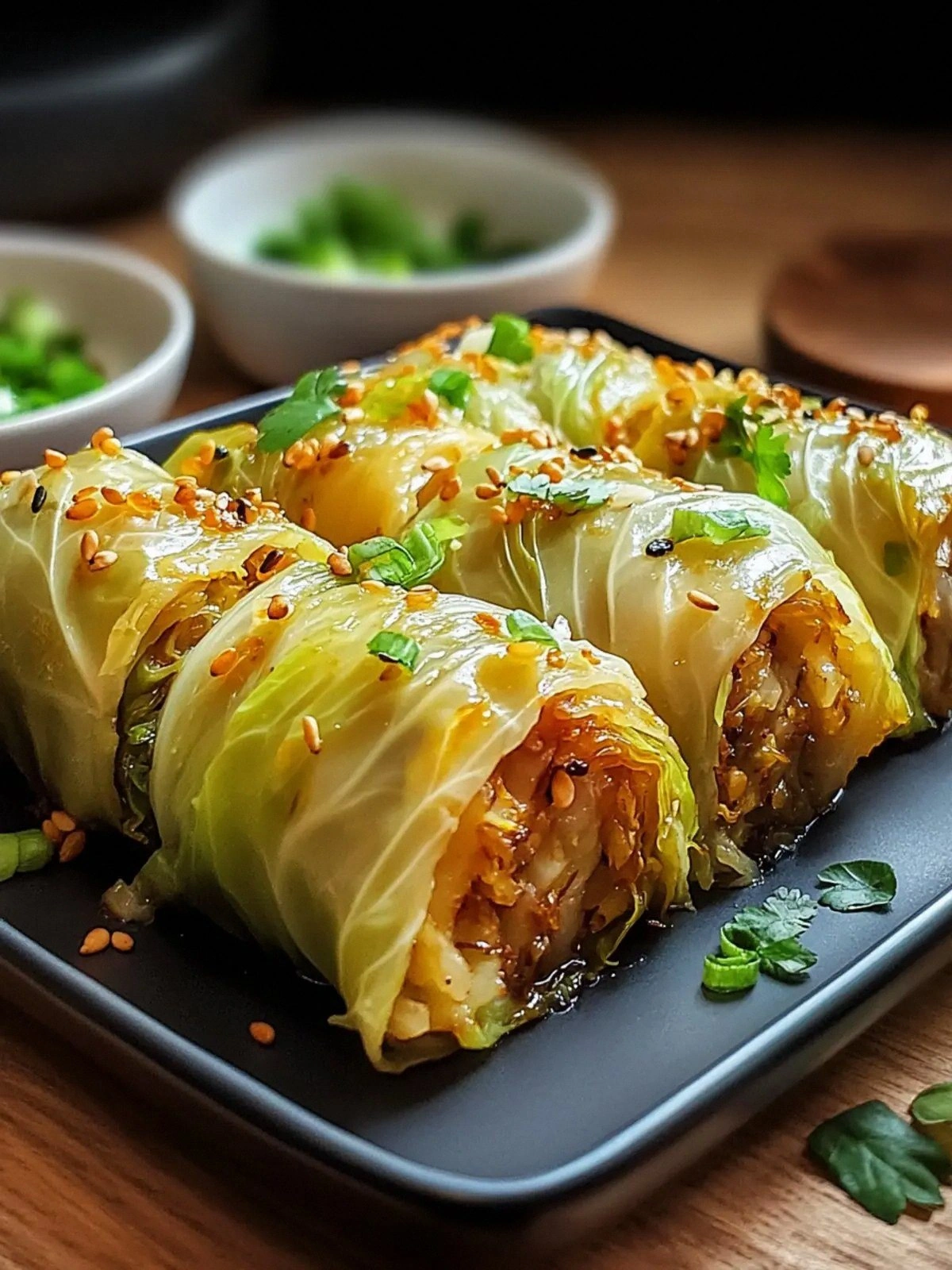
The Method — Step by Step
- Prep the Cabbage: Bring a large pot of salted water to a rolling boil. Blanch the cabbage leaves for 30 seconds, then transfer them to an ice bath to halt cooking. Drain and pat dry. This quick blanch keeps the leaves bright green and flexible, preventing them from tearing during rolling. I’ve seen many rolls fall apart because the leaves were overcooked—never repeat that mistake.
- Chop the Aromatics: Finely mince 2 cloves of garlic, grate 1 tablespoon of fresh ginger, and finely dice 1 medium shallot. This fine chopping ensures the flavors release quickly and evenly during the sauté. The aroma that starts to rise is already a hint of what’s to come—an enticing prelude that sets the mood.
- Sauté the Base: Heat 2 tablespoons of olive oil in a large skillet over medium-high heat. Add the garlic, ginger, and shallot, stirring constantly for 2–3 minutes until fragrant and slightly golden. The sizzling sound is the soundtrack to a great meal; don’t rush this step, or you’ll miss the caramelized notes that add depth.
- Add the Pork: Toss in 1 pound of ground pork, breaking it apart with a spatula. Cook for 5–6 minutes, allowing the pork to brown on all sides. The Maillard reaction here creates a savory crust that locks in juices. I’ve learned that letting the pork sit for a minute before stirring helps achieve an even sear—trust me, it matters.
- Introduce the Veggies: Stir in 1 medium julienned carrot and cook for an additional 2 minutes. The carrot should soften slightly but still retain a bite; it acts as a natural binder for the filling. This step also adds a subtle sweetness that balances the savory elements.
- Season the Mixture: Add 1 tablespoon of fish sauce, 2 tablespoons of tamari, 3 stalks of finely chopped green onions, and 1/4 cup of chopped cilantro. Mix well and cook for 1 minute to allow the flavors to meld. The fish sauce brings saltiness, while the tamari adds umami; together they create a complex flavor profile. If you’re watching sodium, reduce the fish sauce slightly and increase the tamari.
- Build the Sauce: Pour 1 tablespoon of sugar‑free maple syrup, 1 tablespoon of toasted sesame oil, and 1 tablespoon of lime juice into the pan. Stir until the mixture thickens slightly, forming a glossy glaze that coats the pork. The maple syrup’s subtle sweetness counteracts the acidity of lime, while the sesame oil gives a nutty aroma that elevates the dish. Watch for the sauce to reach a consistency that’s thick enough to cling to the filling but still pourable.
- Roll the Cabbage: Place a blanched cabbage leaf on a flat surface. Spoon a generous amount of the pork mixture onto the center of the leaf. Fold the sides over the filling, then roll tightly from the bottom up, securing with a toothpick if needed. Repeat with the remaining leaves. The result should be neat, bite‑size rolls that hold together during cooking.
- Cook the Rolls: Arrange the rolls seam‑side down in a single layer in the skillet. Pour any remaining sauce over them. Reduce heat to medium, cover, and let simmer for 10–12 minutes, or until the cabbage is tender and the filling is cooked through. The steam from the sauce keeps the rolls moist, while the lid traps heat for even cooking. This step is crucial; undercooking leaves the pork raw, overcooking turns the cabbage mushy.
- Finish and Serve: Remove the lid, let the sauce reduce for a minute, then garnish with extra cilantro and a drizzle of toasted sesame oil. Plate the rolls on a warm platter, letting the steam rise like a fragrant cloud. Serve immediately, or let them rest for a few minutes to allow the flavors to meld. The final aroma is intoxicating, and the first bite is a revelation of balanced flavors and textures.
That's it — you did it. But hold on, I've got a few more tricks that'll take this to another level. The next section is all about insider tips that will help you master the dish every time.
Insider Tricks for Flawless Results
The Temperature Rule Nobody Follows
Many cooks think high heat is the secret to a good sear, but the truth is that medium heat allows the pork to brown evenly without burning the sugars in the sauce. I’ve found that a steady 350°F (175°C) in the oven or medium heat on the stovetop gives the best texture. If you’re using a skillet, let the pan heat up for a minute before adding the oil; this ensures an instant sizzle and prevents sticking.
Why Your Nose Knows Best
Your sense of smell is a reliable indicator of when the sauce has reached the right consistency. As the mixture simmers, the aroma will shift from raw to caramelized. When you detect a sweet, toasted scent, it’s a sign the sugars have developed, and the sauce is thickening. If you’re unsure, taste a small spoonful; it should coat the back of your throat without being too thin.
The 5‑Minute Rest That Changes Everything
After simmering, let the rolls rest for five minutes uncovered. This rest period allows the steam to redistribute, ensuring the filling is evenly cooked and the cabbage remains tender. I’ve seen people skip this step, resulting in uneven texture. The rest also lets the flavors meld, making each bite more cohesive.
Use a Paper Towel to Control Moisture
If your pan is too watery, pat the rolls with a paper towel before covering. This absorbs excess liquid and prevents the cabbage from becoming soggy. The trick works wonders for those who like their rolls crisp on the edges. A quick pat before sealing the lid is all it takes.
Keep the Heat Low After Adding the Sauce
Once you pour the maple‑sesame glaze, lower the heat to medium‑low to avoid boiling the sauce. Boiling can cause the sugars to crystallize, resulting in a gritty texture. Keep the sauce gently bubbling; this allows it to cling to the pork without burning.
The Final Touch: A Dash of Fresh Lime
Just before serving, squeeze a fresh lime wedge over each roll. The acidity brightens the dish and cuts through the richness, giving the rolls a fresh finish. I’ve found that a light squeeze is enough; overdoing it can overpower the delicate flavors.
Now that you have the insider tricks, you’re ready to roll up your sleeves and create a dish that will wow your guests every time.
Creative Twists and Variations
This recipe is a playground. Here are some of my favorite ways to switch things up:
Spicy Sriracha Swirl
Add a tablespoon of sriracha to the sauce for a fiery kick. The heat pairs beautifully with the sweetness of maple syrup, creating a complex flavor profile that’s perfect for heat lovers.
Citrus-Infused Roll
Swap lime juice for a splash of yuzu or orange zest to give the rolls a bright, citrusy note. The fresh citrus will contrast the savory pork and add a refreshing finish.
Thai-Inspired Variation
Replace tamari with coconut aminos and add a handful of fresh Thai basil. The result is a fragrant, slightly sweet dish that transports you to the streets of Bangkok.
Vegetarian Delight
Use ground tofu or crumbled tempeh instead of pork. Add mushrooms for umami and a touch of earthiness. This version keeps the low-carb profile while offering a hearty, plant-based alternative.
Smoky Bacon Twist
Crumble a few strips of smoked bacon into the filling. The smoky flavor complements the sesame and tamari, creating a comforting, savory experience that feels like a hug.
Herb-Infused Roll
Incorporate fresh basil and mint into the filling for an herbal burst. The fresh herbs add a light, refreshing contrast to the rich pork and sweet sauce.
Feel free to experiment; the beauty of this recipe lies in its adaptability. Each variation brings a new dimension while preserving the core flavors that make this dish unforgettable.
Storing and Bringing It Back to Life
Fridge Storage
Store cooked rolls in an airtight container for up to 4 days. Keep the sauce separate until serving to prevent the leaves from becoming soggy. When ready to eat, reheat in a skillet over medium heat, adding a splash of water to steam the rolls gently.
Freezer Friendly
Wrap each roll tightly in plastic wrap, then place them in a freezer bag. They’ll stay fresh for up to 3 months. Thaw overnight in the refrigerator before reheating. This method is perfect for meal prep or a quick dinner on a busy night.
Best Reheating Method
Reheat the rolls in a skillet over medium-low heat, adding a teaspoon of water or broth to keep them moist. Alternatively, steam them in a steamer basket for 5 minutes. Finish with a quick drizzle of toasted sesame oil to restore the glossy finish.