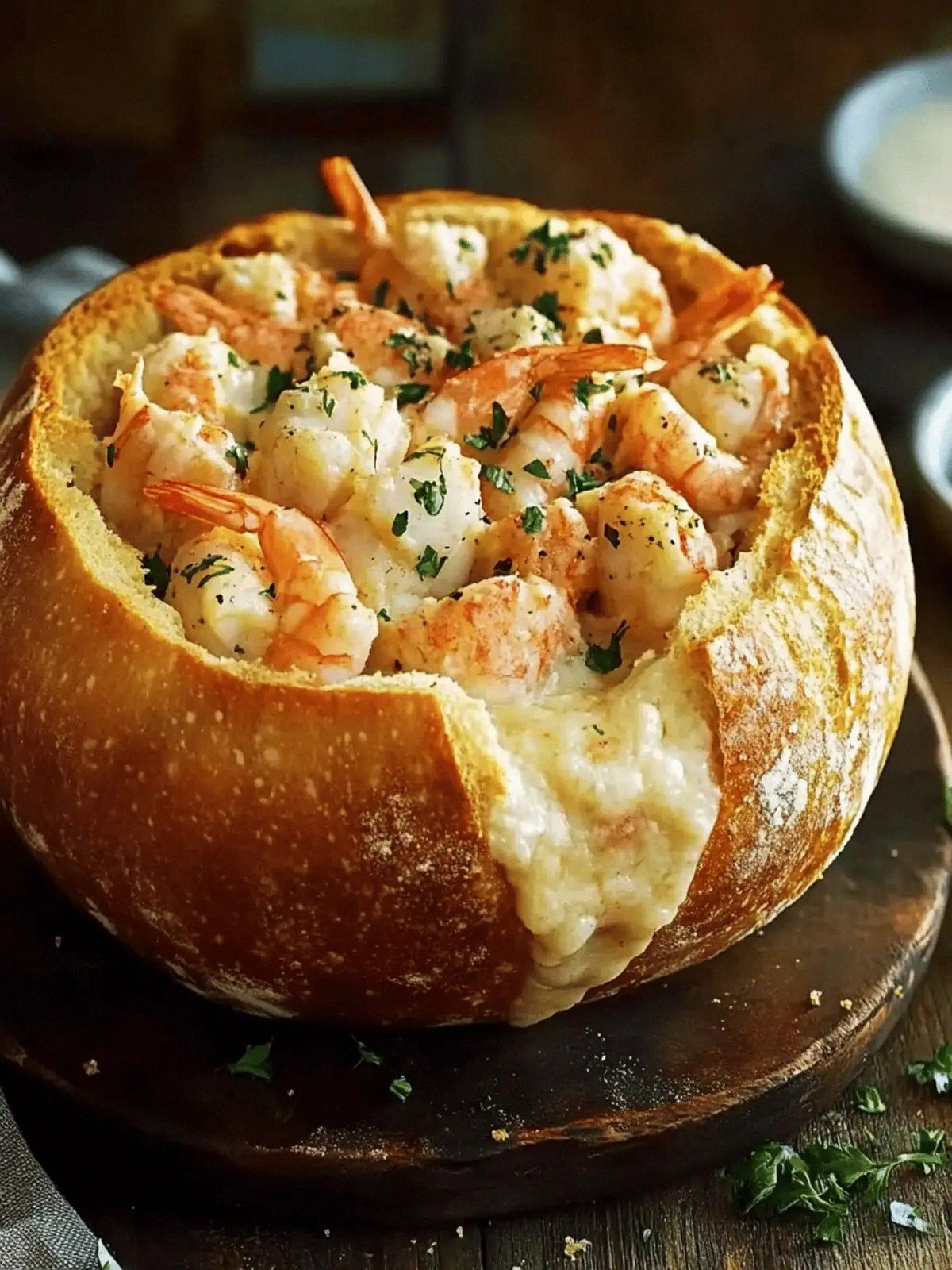
Last summer, I found myself staring at a half‑cooked loaf of bread that had been left too long in the oven, its crust charred and its interior still doughy. I could have tossed it, but my friends begged for something that could salvage the situation and still wow the taste buds. I pulled a recipe from a forgotten notebook, and what emerged was a revelation: a savory stuffed seafood bread that turns a kitchen mishap into a culinary triumph. The result was a golden loaf that looked like it was baked by a pastry chef, yet it was packed with briny shrimp and silky crab. The aroma alone made the kitchen feel like a seaside market on a bright day.
Picture the scene: a clattering kitchen, the timer ticking, the scent of butter and garlic swirling through the air, a spoonful of lemon‑kissed cream cheese glistening on a wooden spoon. The sound of the bread sliding into the oven is the soundtrack of anticipation, while the faint hiss of steam from the shrimp hints at the depth of flavor to come. The texture of the crust, crisp on the outside and chewy on the inside, promises a satisfying bite, and the first taste is a burst of umami that lingers like a summer breeze on the tongue. The visual of a loaf split open to reveal a molten, golden filling is a feast for the eyes, and the gentle steam that rises is a prelude to the savory symphony inside. The anticipation builds as the timer buzzes, and the kitchen becomes a stage for a culinary performance.
This version stands out because it marries the best of both worlds: the comforting familiarity of a crusty loaf and the bold, briny punch of seafood. Unlike other stuffed bread recipes that rely on bland fillers, this dish uses fresh shrimp and crab meat to deliver a complex flavor profile that sings. The cream cheese base is not just a filler; it acts as a silky binder that keeps the seafood moist while adding a subtle tang. The cheddar adds a sharp, melty contrast that balances the brininess, and the lemon juice provides a bright, citrusy lift that cuts through the richness. The result is a bread that is not only filling but also an explosion of textures and flavors that will keep guests asking for seconds. I dare you to taste this and not go back for seconds.
In addition, the use of a single loaf rather than multiple rolls keeps the presentation elegant and makes the dish feel like a centerpiece at any gathering. The combination of shrimp and crab is a nod to classic seafood pastas, but the bread medium turns it into a handheld masterpiece. The recipe’s simplicity is deceptive; each ingredient is chosen for its ability to complement the others without overpowering. The method is straightforward, yet the outcome feels gourmet, a testament to the power of thoughtful ingredient pairing. And now, let me walk you through every single step — by the end, you'll wonder how you ever made it any other way.
What Makes This Version Stand Out
- Flavor Fusion: The shrimp and crab bring a briny depth that is balanced by the creamy, tangy filling, creating a taste profile that feels both familiar and adventurous.
- Texture Contrast: The crust’s flaky crunch meets the molten cheddar and silky cream cheese, giving each bite a satisfying play of textures.
- Simplicity in Execution: No complicated sauces or long marinades—just fresh ingredients, a few seasonings, and a single baking step.
- Visual Appeal: The golden, bubbling filling peeking out from the loaf’s split creates a dramatic presentation that turns heads.
- Make‑Ahead Friendly: The stuffing can be prepared a day ahead, then baked fresh, saving time on busy evenings.
- Versatile Serving: Whether served as an appetizer at a party or a hearty dinner with a side salad, this bread adapts effortlessly.
- Ingredient Quality: The recipe rewards high‑quality shrimp and crab; fresher the seafood, richer the flavor.
Inside the Ingredient List
The Flavor Base
1 loaf Crusty Bread Loaf is the canvas of this dish. Its sturdy crumb holds the stuffing together while providing the signature crunch when toasted. If you’re using a store‑bought loaf, look for one with a dense interior and a slightly chewy crust; it will stand up to the moisture of the filling. Skipping the loaf would turn this into a casserole, which is a different experience entirely.
The Texture Crew
8 oz Cream Cheese acts as the creamy glue, binding the shrimp and crab while adding a subtle tang that brightens the overall profile. If you prefer a lighter texture, substitute part of the cream cheese with Greek yogurt for a tangier, lower‑fat option. A too-soft cream cheese can make the loaf soggy, so keep it at room temperature before mixing.
1 cup Shredded Cheddar Cheese melts into a golden, bubbly layer that creates a satisfying contrast to the seafood. Cheddar’s sharpness cuts through the richness, and its meltability ensures a gooey center. If you’re a fan of sharper flavors, try a smoked cheddar for an extra layer of depth.
The Unexpected Star
1 cup Shrimp adds a delicate sweetness and a firm bite that pairs beautifully with the crab. Fresh shrimp are ideal, but you can use thawed frozen shrimp if you’re in a hurry. Avoid overcooking the shrimp before stuffing; they’ll continue to cook in the oven.
1 cup Crab Meat contributes a subtle briny flavor and a tender, flaky texture that complements the shrimp. Opt for lump crab for a more luxurious bite, or use a mix of lump and claw for variety. If crab isn’t available, a mild white fish like cod can serve as a suitable stand‑in.
The Final Flourish
1 tsp Garlic Powder brings warmth and depth without the sharpness of fresh garlic. It’s a quick way to layer flavor, and if you prefer a fresher note, replace it with 1 minced garlic clove. A pinch of cayenne can add a subtle heat for adventurous palates.
1 tbsp Lemon Juice provides a bright, citrusy lift that cuts through the richness of the cream cheese and cheddar. Freshly squeezed lemon is best, but bottled can work in a pinch. The acidity also helps preserve the freshness of the seafood during baking.
1 handful Fresh Herbs—such as parsley, chives, or dill—adds a fresh, aromatic layer that brightens the dish. Roughly chop the herbs to distribute them evenly throughout the stuffing. If you’re in a hurry, dried herbs can be used, but the flavor will be less vibrant.
Everything's prepped? Good. Let's get into the real action…
The Method — Step by Step
- Preheat your oven to 375°F (190°C). While the oven warms, slice the loaf lengthwise, creating a pocket that’s wide enough to hold the stuffing but still sealed at the bottom. The goal is a snug fit that prevents the filling from spilling out during baking. If you’re using a pre‑baked loaf, simply cut it open; the crust will still hold up well.
- In a medium bowl, combine the cream cheese and cheddar cheese until smooth. The mixture should be creamy but not runny; if it’s too thick, let it sit at room temperature for a few minutes. The creaminess of the cheese blend is key to achieving a molten center that oozes out when the loaf is sliced.
- Add the shrimp, crab meat, garlic powder, lemon juice, and fresh herbs to the cheese mixture. Stir gently to incorporate, ensuring the seafood is evenly coated. The lemon juice not only adds brightness but also helps keep the shrimp from drying out during baking. This step is where the flavors truly start to mingle.
- Carefully spoon the stuffing into the loaf pocket, pressing it down gently to fill the cavity. The stuffing should be snug but not overpacked, allowing the bread to expand slightly as it bakes. The aroma that begins to rise as you fill the loaf is a prelude to the savory delight that’s about to unfold.
- Place the stuffed loaf on a baking sheet lined with parchment paper. If you like a crispier crust, sprinkle a tablespoon of grated Parmesan on top before baking. This not only adds flavor but also creates a golden, crunchy layer that contrasts beautifully with the molten center.
- Bake for 25–30 minutes, or until the crust turns a deep golden brown and the cheese inside is bubbling. The internal temperature of the stuffing should reach 165°F (74°C) for safe consumption. The sound of bubbling cheese is a sure sign that the loaf is ready.
- Let the loaf rest for 5 minutes after removing it from the oven. Resting allows the juices to redistribute, ensuring every bite is moist and flavorful. While it rests, the crust will firm up slightly, making it easier to slice cleanly.
- Slice the loaf into generous wedges, allowing the molten filling to spill out onto the plate. Serve immediately, perhaps with a side of crisp salad or a glass of chilled white wine. The combination of textures and flavors will have your guests raving.
That's it — you did it. But hold on, I've got a few more tricks that'll take this to another level...
Insider Tricks for Flawless Results
The Temperature Rule Nobody Follows
Keep the oven at a steady 375°F (190°C) throughout baking. Many cooks lower the heat midway, which can cause the crust to burn while the inside remains undercooked. A consistent temperature ensures even cooking and a perfect golden crust. I once tried a lower temperature to avoid a burnt crust, but the stuffing stayed gooey and underdone, so I learned to trust the heat.
Why Your Nose Knows Best
Trust the aroma as a cue for doneness. When the cheese starts to bubble and the crust emits a nutty, toasted scent, the loaf is almost ready. If you’re still unsure, insert a toothpick into the center; if it comes out clean, you’re good to go. The smell is a reliable indicator that the flavors are fully developed.
The 5-Minute Rest That Changes Everything
Let the loaf rest for exactly five minutes. During this brief pause, the steam inside the bread condenses and redistributes, preventing a dry center. The crust also firmed up, making it easier to slice cleanly. Skipping this step often results in a loaf that feels raw or has a soggy crumb.
Freshness Is Key
Use the freshest shrimp and crab you can find. Fresh seafood brings a bright, clean flavor that canned or frozen options can’t match. If you’re buying pre‑shucked shrimp, check that it’s bright pink and not dull or translucent. Freshness is the difference between a good loaf and an unforgettable one.
Keep the Crust Crunchy
Finish the loaf with a quick broil. After baking, switch the oven to broil for 1–2 minutes to crisp the top. Watch closely; you want a golden finish, not a burnt one. The broil adds a satisfying crunch that contrasts with the molten interior.
Creative Twists and Variations
This recipe is a playground. Here are some of my favorite ways to switch things up:
Mediterranean Medley
Swap the shrimp and crab for diced octopus and calamari, and add sun‑dried tomatoes, olives, and a drizzle of olive oil. The briny, smoky flavors will transport you to a seaside Mediterranean tavern. This version pairs wonderfully with a chilled rosé.
Spicy Cajun Kick
Add a tablespoon of Cajun seasoning to the stuffing and sprinkle a pinch of crushed red pepper flakes on top before baking. The heat will dance with the creamy base, creating a bold, fiery bite that’s perfect for summer barbecues.
Cheese Lover’s Delight
Replace the cheddar with Gruyère or fontina for a richer, nutty flavor. The melted cheese will create a silky, velvety layer that coats the bread like velvet. This version is ideal for a cozy family dinner.
Herb Garden Variation
Increase the amount of fresh herbs to a generous handful, and add chopped basil and mint. The herbal burst will brighten the dish and add a refreshing contrast to the savory filling. Serve with a cucumber yogurt dip for a cool counterpoint.
Vegan Edition
Use a plant‑based cream cheese and replace the shrimp and crab with sautéed mushrooms and lentils. The earthy flavors will create a hearty, protein‑rich loaf that satisfies even the most discerning vegans. Top with a sprinkle of nutritional yeast for a cheesy finish.
Breakfast Bonanza
Add a handful of chopped spinach and a beaten egg to the stuffing for a savory, protein‑rich breakfast loaf. The egg will bind the filling, creating a custard‑like texture that pairs perfectly with a side of fresh fruit. This version is a breakfast favorite for adventurous mornings.
Storing and Bringing It Back to Life
Fridge Storage
Store the leftover loaf in an airtight container. Keep it in the refrigerator for up to 3 days. Before serving, let it sit at room temperature for 10–15 minutes to soften the crust slightly, or reheat briefly in the oven at 350°F (175°C) for 5–7 minutes to restore the crunch.
Freezer Friendly
Wrap the loaf tightly in plastic wrap, then place it in a freezer bag. It can be frozen for up to 2 weeks. Thaw overnight in the refrigerator, then finish by baking at 350°F (175°C) for 10–12 minutes. The texture remains delightful, and the flavors stay intact.
Best Reheating Method
Reheat in a preheated oven at 350°F (175°C). Add a splash of water to the bottom of the baking sheet to create steam, which keeps the bread moist. Reheat for 8–10 minutes, or until the cheese is melted and the crust is crisp. The steam trick ensures the loaf doesn’t dry out.