Picture this: the kitchen clock reads 6:07 PM, the oven is preheated, and you’re staring at a half‑filled fridge that looks more like a pantry than a source of inspiration. I’ve been chasing that “last‑minute dinner that feels fancy” for years, and the moment I stumbled onto this sheet‑pan lemon‑balsamic chicken, I knew I’d found the missing piece of my culinary puzzle.
I was halfway through a frantic grocery run when my friend dared me to whip up a weeknight dinner that could compete with a restaurant. I said, “I dare you to taste this and not go back for seconds.” The sizzling sound of potatoes hitting the pan, the bright citrus aroma mingling with the deep, smoky notes of balsamic—everything in that moment felt like a symphony. I swear that first bite was a burst of sunshine on a cloudy day, and I couldn’t stop bragging about it to anyone who’d listen.
What makes this version stand out? It’s the way every element—tender chicken, crisp potatoes, a tangy glaze, fresh herbs, olives, and a creamy tzatziki finish—comes together in a single pan, creating layers of flavor that are both simple and sophisticated. Most recipes get this completely wrong. Here’s what actually works: the glaze coats the chicken and potatoes like velvet, while the fresh herbs provide a bright counterpoint that keeps the dish from becoming too sweet. The result is a dish that’s hands down the best version you’ll ever make at home.
I’ll be honest—after the first batch, I ate half the dish before anyone else even got a chance. That’s the power of this recipe: it’s so delicious that it practically sells itself. And if you’ve ever struggled with a sheet‑pan dinner that ends up soggy or uneven, you’re not alone—this is the fix you’ve been searching for.
The secret sauce is a surprisingly simple glaze that marries the acidity of lemon with the deep sweetness of balsamic vinegar, a hint of Dijon for depth, and a touch of oregano for that Mediterranean vibe. The addition of pepperoncini and olives brings briny complexity, while the sesame seeds add a subtle nutty crunch. Together, these ingredients create a flavor profile that’s both bold and balanced, making the dish memorable without being overbearing.
Picture yourself pulling this out of the oven, the whole kitchen smelling incredible, and a plate of golden, caramelized potatoes and perfectly seared chicken waiting for you. The moment you lift the lid, steam rises in a fragrant cloud that’s almost too good to eat. I promise you, by the end of this guide, you’ll wonder how you ever made it any other way.
Let me walk you through every single step — by the end, you’ll wonder how you ever made it any other way. The journey begins with a few simple ingredients and a willingness to experiment. It’s about embracing the unexpected and letting flavors dance together. Ready? Let’s dive in.
What Makes This Version Stand Out
- Bold Flavor: The lemon‑balsamic glaze gives the dish a bright, tangy punch that cuts through the richness of the chicken and potatoes. It’s a flavor profile that feels both fresh and comforting.
- Texture Play: Crispy edges that shatter like thin ice on the potatoes contrast with the juicy interior of the chicken, creating a satisfying bite that keeps you coming back.
- One‑Pan Simplicity: No more juggling multiple pots and pans. Everything cooks together, saving time and cleanup while still delivering a gourmet experience.
- Freshness Factor: Fresh herbs, olives, and pepperoncini add layers of flavor that elevate the dish beyond ordinary sheet‑pan fare.
- Make‑Ahead Potential: The glaze can be prepared in advance, and the dish can be assembled ahead of time, making it a perfect choice for busy weeknights.
- Crowd‑Pleaser: The combination of savory, sweet, and slightly spicy notes makes this dish a hit at dinner parties or family gatherings.
Inside the Ingredient List
The Flavor Base
The balsamic vinegar and lemon juice form the backbone of this dish’s flavor. The acidity lifts the natural sweetness of the potatoes, while the balsamic adds depth and a hint of caramel. If you skip the balsamic, the glaze will lack that signature richness, and the dish will feel flat. For a slightly sweeter version, substitute a splash of honey or maple syrup for the balsamic, but keep the lemon for brightness.
The Texture Crew
Baby potatoes are the star of the texture game. Their waxy skin holds up to roasting, giving you a firm bite that’s not mushy. Choosing small, uniform potatoes ensures even cooking. If you’re in a pinch, use diced potatoes, but remember to cut them smaller to avoid overcooking. The sesame seeds add a subtle crunch that breaks up the soft interior, creating a delightful contrast.
The Unexpected Star
Pepperoncini and green olives bring brine and a touch of heat that you won’t find in typical sheet‑pan recipes. They add a savory depth that balances the sweet glaze. If you’re not a fan of olives, swap them for sun‑dried tomatoes for a different burst of umami. For a milder version, reduce the pepperoncini to a quarter cup.
The Final Flourish
Tzatziki sauce and feta cheese provide a cool, creamy counterpoint that cuts through the richness of the glaze. The yogurt in the tzatziki also helps tenderize the chicken. If you’re lactose intolerant, use a dairy‑free yogurt or skip the tzatziki entirely. The fresh herbs—dill, basil, and thyme—add a fragrant finish that elevates the dish from simple to spectacular.
Everything’s prepped? Good. Let’s get into the real action.
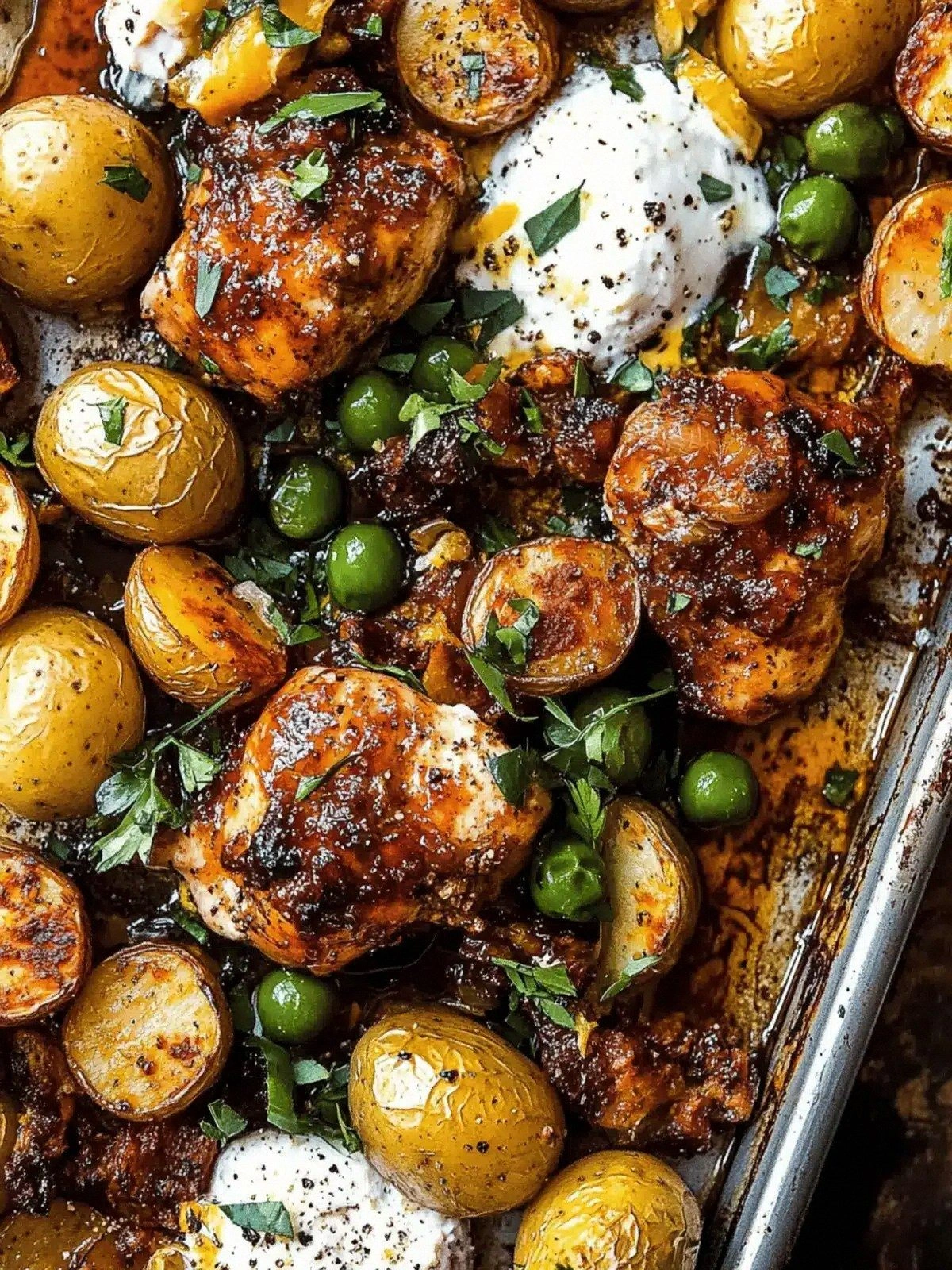
The Method — Step by Step
- Preheat your oven to 425°F (220°C). Line a large baking sheet with parchment paper or lightly oil it to prevent sticking. This step ensures even browning and makes cleanup a breeze. As the oven heats, the air circulation will help the potatoes crisp up beautifully.
- Wash the baby potatoes and pat them dry. Halve or quarter them depending on size, ensuring each piece is roughly equal in size for uniform cooking. Toss the potatoes in 1 tablespoon of olive oil, 1 teaspoon of salt, and 1/2 teaspoon of black pepper. This coating locks in moisture while creating a golden crust.
- Place the seasoned potatoes on the baking sheet in a single layer. Roast for 10 minutes, then flip them so both sides get exposed to the heat. The early roasting caramelizes the sugars, giving the potatoes a deep, savory flavor.
- While the potatoes roast, prepare the glaze. In a small bowl, whisk together 1/4 cup balsamic vinegar, 2 tablespoons Dijon mustard, 2 tablespoons lemon juice, 1 teaspoon paprika, 2 tablespoons chopped oregano, 1/2 teaspoon chili flakes, and 1 teaspoon each of salt and pepper. The glaze should be thick enough to coat the chicken and potatoes without being watery.
- Cut the chicken into bite‑sized pieces and season with salt and pepper. Coat each piece in the glaze, reserving a small amount for drizzling later. The glaze not only adds flavor but also helps the chicken develop a glossy, caramelized surface.
- Add the glazed chicken to the baking sheet, interspersing it with the potatoes. Spread the remaining glaze over the top of the chicken and potatoes. This step ensures every bite is infused with that bright, tangy flavor.
- Return the sheet to the oven and roast for an additional 20 minutes. Halfway through, drizzle the reserved glaze over the chicken to deepen the flavor. The chicken should reach an internal temperature of 165°F (74°C) and the potatoes should be tender yet still firm.
- Once done, remove from the oven and let the dish rest for 5 minutes. This rest period allows the juices to redistribute, ensuring the chicken stays moist. While resting, sprinkle 1/4 cup mixed chopped fresh herbs, 1/4 cup sliced pepperoncini, 1/2 cup green olives, and 1 tablespoon sesame seeds over the top.
- Serve the chicken and potatoes hot, topped with a generous spoonful of tzatziki and crumbled feta cheese. The cool, creamy tzatziki cuts through the richness, while the feta adds a salty, tangy finish.
- Enjoy your masterpiece, and remember to savor each bite. The combination of crispy potatoes, juicy chicken, and vibrant sauce will have everyone asking for the recipe. If you’re feeling adventurous, pair it with a crisp white wine or a chilled rosé for an elevated dining experience.
That’s it—you did it. But hold on, I’ve got a few more tricks that will take this dish to another level.
Insider Tricks for Flawless Results
The Temperature Rule Nobody Follows
Many cooks set the oven to 400°F, but this dish thrives at a higher 425°F. The extra heat ensures a caramelized crust on both the chicken and potatoes. If you’re using a convection oven, lower the temperature by 25°F to avoid over‑browning.
Why Your Nose Knows Best
Trust your olfactory senses. When the glaze starts to caramelize, the aroma will shift from sharp to sweet. That’s your cue to flip the potatoes or drizzle more glaze. Your nose will guide you to the perfect level of char.
The 5‑Minute Rest That Changes Everything
Letting the dish rest after roasting allows the juices to redistribute. This simple step keeps the chicken moist and the potatoes from drying out. Skip this step and you’ll end up with a less cohesive flavor profile.
The Herb‑Herb Mix
Using a blend of dill, basil, and thyme adds depth. Each herb brings a unique note—dill’s bright bite, basil’s sweet warmth, and thyme’s earthy undertone. If you’re allergic to one, replace it with another fresh herb you love.
The Quick Zest Boost
Grate a strip of lemon zest into the glaze before adding the juice. The zest releases essential oils that amplify the citrus flavor without adding acidity. It’s a small step that makes a big difference.
Creative Twists and Variations
This recipe is a playground. Here are some of my favorite ways to switch things up:
Mediterranean Twist
Swap the oregano for oregano and rosemary, and replace the pepperoncini with sun‑dried tomatoes. Serve with a side of couscous for a complete Mediterranean meal. Your guests will think they’re dining in the Mediterranean.
Spicy Cajun Flair
Add 1 teaspoon of Cajun seasoning to the glaze and replace the lemon juice with lime juice. The citrusy tang pairs with the heat, creating a dish that’s both bold and balanced. This version is perfect for a summer BBQ.
Herb‑Infused Chicken
Marinate the chicken in a mixture of olive oil, garlic, rosemary, and thyme for 30 minutes before roasting. The herbs will permeate the meat, giving it an aromatic, savory depth. Pair with roasted root vegetables for a hearty dinner.
Vegan Version
Replace the chicken with tofu cubes or tempeh, and use a plant‑based yogurt for tzatziki. The tofu will soak up the glaze, creating a protein‑rich, cruelty‑free dish that still feels indulgent.
Sweet & Smoky
Add a tablespoon of maple syrup to the glaze and finish with a sprinkle of smoked sea salt. The sweetness balances the acidity, while the smoke adds depth. This version is a crowd‑pleaser at holiday gatherings.
Storing and Bringing It Back to Life
Fridge Storage
Store leftovers in an airtight container for up to 3 days. Keep the sauce separate if possible to avoid soggy potatoes. Reheat in the oven at 350°F (175°C) for 10 minutes, or in a microwave on medium power for 2 minutes, then stir to redistribute the glaze.
Freezer Friendly
Freeze the dish in a freezer‑safe container for up to 2 months. Thaw overnight in the refrigerator, then reheat as described above. The flavors will remain vibrant, and the texture will stay intact.
Best Reheating Method
Add a splash of water or broth before reheating to create steam, which helps restore moisture. Finish with a quick drizzle of fresh lemon juice to brighten the flavors. This simple trick ensures the dish tastes as fresh as when it was first made.