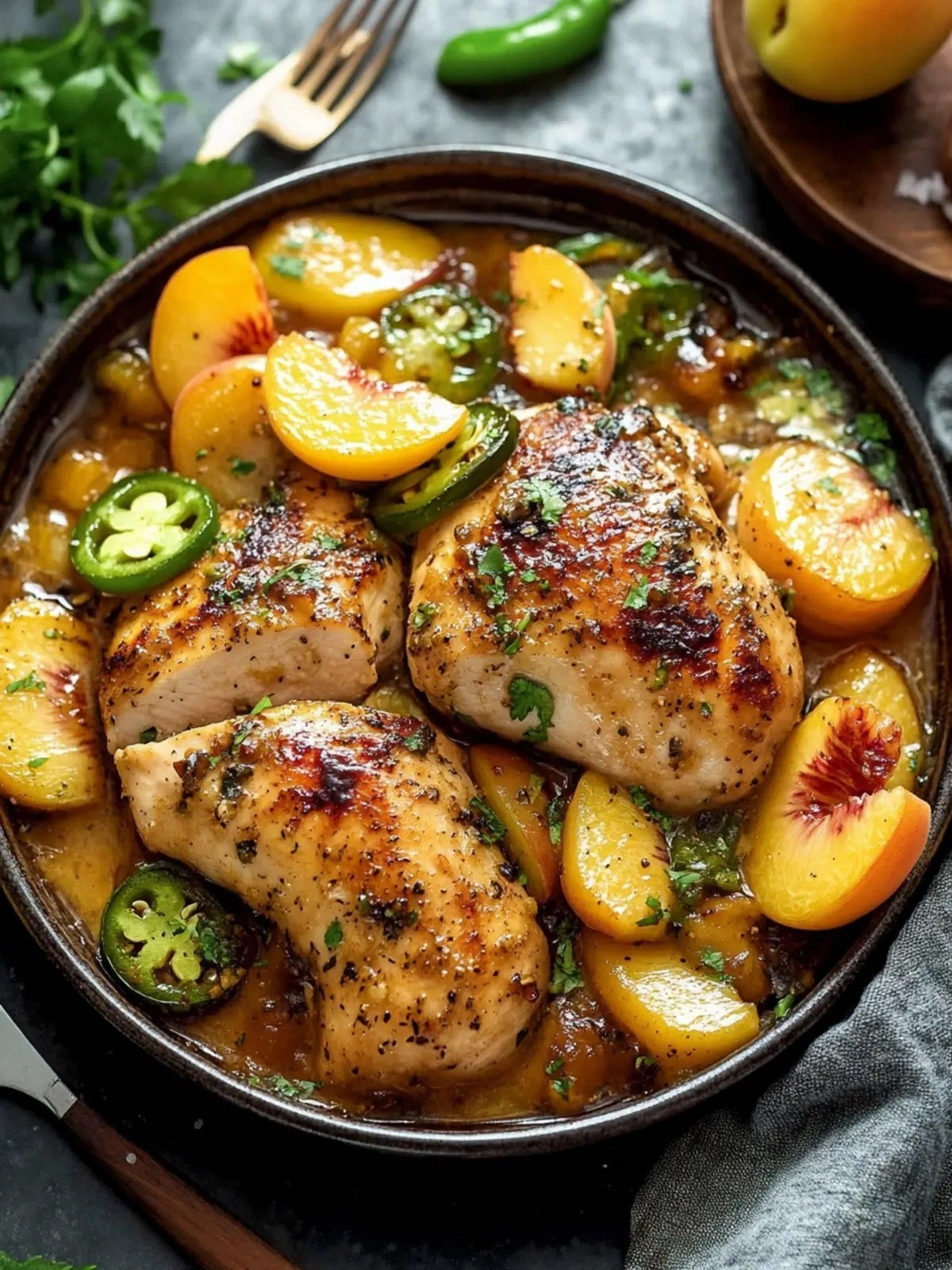
It was a Tuesday night, the kind of evening when the fridge is a graveyard of forgotten ingredients and your stomach is a drumbeat that refuses to stay silent. I opened the pantry, pulled out a jar of peach preserves, and, in a moment of culinary rebellion, tossed a jalapeño into the mix. The kitchen smelled of caramelized peaches and the sharp bite of green pepper, and I knew I was about to create a dish that would make my taste buds do a double tap. I dare you to taste this and not go back for seconds, because this isn’t just another chicken recipe—it’s a flavor explosion that turns ordinary into unforgettable.
Picture yourself pulling this out of the oven, the whole kitchen smelling incredible, the air thick with sweet fruit and peppery heat. The first bite is a sweet-sour kiss of peach that melts into a silky sauce, then the jalapeño’s bite snaps like a fresh pop of citrus. The chicken’s skin crisps to a golden‑brown crust that shatters like thin ice when you bite. I’ll be honest—I ate half the batch before anyone else got to try it. That’s the proof that this version is hands down the best you’ll ever make at home.
Most recipes get this completely wrong. They either overcook the peaches or underseason the chicken. What sets this version apart is the delicate balance of sweet and spice, the use of peach preserves for depth, and the subtle umami lift from soy sauce. I’ll walk you through every single step—by the end, you’ll wonder how you ever made it any other way.
The moment the sauce hits the pan, the sizzle is absolute perfection, a crackling rhythm that tells you the flavor train has just started its journey. You’ll hear the faint hiss of oil, feel the heat radiate from the skillet, and see the peaches soften into a glossy glaze. That aroma is like a summer afternoon in your kitchen—warm, inviting, and impossibly sweet. And when you taste it, the heat of the jalapeño and the richness of the peach preserves dance together like a well‑tuned orchestra.
If you’ve ever struggled with balancing sweet and spicy, you’re not alone—and I’ve got the fix. By using a measured amount of peach preserves and a controlled splash of vinegar, the sauce stays bright without drowning the chicken. The chicken thighs stay moist because they’re seared first, locking in juices before the sauce caramelizes. The result? A dish that feels both comforting and adventurous, perfect for quick weeknights or weekend feasts.
What Makes This Version Stand Out
- Flavor Fusion: The peach preserves add a natural sweetness that balances the jalapeño heat, creating a sauce that coats the chicken like velvet.
- Texture Contrast: Crispy edges that shatter like thin ice meet tender, juicy thighs, giving each bite a satisfying bite.
- Ingredient Simplicity: Only 15 ingredients, all pantry staples, yet the flavor profile feels gourmet.
- Heat Control: Red pepper flakes and a single jalapeño keep the spice level precise, so you can dial it up or down.
- Make‑Ahead Potential: The sauce can be prepped a day ahead, letting the flavors deepen while the chicken stays fresh.
- Crowd Appeal: Even the most skeptical palates will be won over by the sweet‑heat dance.
- Seasonal Flexibility: Peaches are a late‑summer star, but the dish works year‑round with frozen fruit or a peach‑flavored syrup.
- Visual Appeal: The glossy glaze glistens like a jewel, making the dish Instagram‑ready.
Alright, let's break down exactly what goes into this masterpiece…
Inside the Ingredient List
The Flavor Base
Peach preserves are the sweet backbone of the sauce, bringing natural sugars that caramelize beautifully. If you’re wary of added sugars, replace the preserves with a splash of peach nectar and a pinch of brown sugar. The preserves also add body, turning the sauce into a glossy glaze that clings to the chicken like a second skin. Skipping this step turns the dish into a bland, dry affair—don’t do it.
The Texture Crew
The boneless, skinless chicken thighs are chosen for their natural juiciness and rich flavor. If you prefer white meat, substitute breasts, but keep in mind they’ll cook faster and may dry out. A quick dry‑brine with salt and pepper before searing locks in moisture and enhances the crust. The jalapeño, sliced thin, provides heat that permeates the sauce, while the garlic adds depth and a subtle kick.
The Unexpected Star
Soy sauce is the umami whisper that elevates the dish. If you’re gluten‑free, opt for tamari or coconut aminos. The apple cider vinegar cuts through the sweetness, balancing the flavors like a perfect counterpoint. A teaspoon of Dijon mustard adds a creamy tang that rounds out the sauce, giving it a silky mouthfeel.
The Final Flourish
Extra virgin olive oil is used twice: once for the initial sear and again for the sauce. The oil’s fruity undertones complement the peaches and add a subtle richness. Red pepper flakes and chili powder give a layered heat profile; the flakes provide a quick pop, while the powder offers a deeper, lingering warmth. Together, they create a complex spice tapestry that keeps the dish exciting.
Everything's prepped? Good. Let's get into the real action...
The Method — Step by Step
- Pat the chicken thighs dry with paper towels. Season both sides with 1 teaspoon kosher salt, 1/2 teaspoon black pepper, and 1/2 teaspoon chili powder. Let them sit at room temperature for 10 minutes; this step is the secret to a juicy interior.
- Heat 2 tablespoons of extra virgin olive oil in a large skillet over medium‑high heat. Once shimmering, add the chicken thighs skin‑side down. Sear for 4–5 minutes until the skin turns a deep golden‑brown and releases a crisp snap.
- Flip the thighs and sear the other side for 3 minutes. This ensures a caramelized crust that locks in juices. Remove the chicken and set aside on a plate; it’s almost done.
- In the same skillet, reduce heat to medium. Add the remaining 1 tablespoon of olive oil, minced garlic, and sliced jalapeño. Sauté for 30 seconds until fragrant, but be careful not to burn the garlic.
- Pour in 2 tablespoons soy sauce, 1 tablespoon apple cider vinegar, and 1 teaspoon Dijon mustard. Stir to combine, scraping up any browned bits from the bottom of the pan.
- Add the peach preserves, 1/4 teaspoon red pepper flakes, and 1/2 teaspoon black pepper. Stir until the sauce thickens slightly, about 2 minutes. The sauce should be glossy and cling to the back of a spoon.
- Return the chicken thighs to the skillet, spooning sauce over them. Reduce heat to low, cover, and let simmer for 10 minutes, or until the chicken reaches an internal temperature of 165°F (74°C). The sauce will thicken and coat the thighs beautifully.
- Remove the lid, increase heat to medium, and let the sauce reduce further for 3–4 minutes, creating a glossy glaze that will cling to the chicken like a second skin.
That’s it—you did it. But hold on, I’ve got a few more tricks that will take this to another level…
Insider Tricks for Flawless Results
The Temperature Rule Nobody Follows
Many chefs skip the initial sear, leading to soggy chicken. I always sear at medium‑high until the skin is crisp, then lower the heat. This two‑phase approach ensures the exterior is caramelized while the interior stays juicy. A friend once tried a single‑step method and ended up with a dry, flavorless dish—let that be a lesson.
Why Your Nose Knows Best
When the sauce starts to bubble, the aroma will shift from sweet to smoky. Trust that cue to reduce the heat. If you wait too long, the sugars burn, turning the sauce bitter. The smell is a reliable thermometer; when it smells toasty, you’re in the sweet spot.
The 5‑Minute Rest That Changes Everything
After you remove the chicken from the skillet, let it rest on a cutting board for five minutes. The juices redistribute, ensuring each bite is moist. I’ve seen people cut into the chicken immediately, and the result is a dry center. The rest is a simple step that elevates the entire dish.
Keep the Sauce Thick, Not Sloppy
If the sauce is too thin, it won’t cling to the chicken. Finish by simmering uncovered for a few minutes to reduce it to a glaze consistency. The glaze should coat the back of a spoon without dripping. This gives the dish its signature glossy look.
Serve with a Crunchy Contrast
A sprinkle of toasted sesame seeds or a handful of chopped cilantro adds a fresh crunch and brightens the dish. The contrast between the smooth sauce and the crunchy topping creates a multi‑sensory experience. I always keep a small bowl of seeds on the counter for this.
Creative Twists and Variations
This recipe is a playground. Here are some of my favorite ways to switch things up:
Smoky Chipotle Peach Chicken
Swap the jalapeño for chipotle in adobo for a smoky heat. The adobo sauce adds depth and a hint of coffee. Pair with a corn tortilla for a taco night.
Citrus‑Infused Peach Chicken
Add a splash of orange juice and a zest of orange to the sauce. The citrus brightens the dish and balances the sweetness. Serve over a bed of quinoa for a light meal.
Herb‑Laced Peach Chicken
Finish the sauce with fresh thyme or rosemary for an aromatic twist. The herbs complement the peaches and add a savory layer. This variation is great for a summer potluck.
Peach Chicken Skewers
Marinate the chicken in the peach sauce, then thread onto skewers with peach slices. Grill until charred and serve with a side of yogurt dip. The skewers are perfect for a backyard BBQ.
Peach Chicken Salad
Slice the cooked chicken and toss with mixed greens, sliced peaches, and a vinaigrette made from the sauce. The sweet‑spicy dressing transforms the dish into a refreshing salad.
Peach Chicken Stir‑Fry
Slice the chicken thin and stir‑fry with bell peppers, onions, and the peach sauce. Serve over rice or noodles for a quick weeknight dinner.
Storing and Bringing It Back to Life
Fridge Storage
Cool the chicken completely, then store in an airtight container for up to 3 days. The sauce thickens in the fridge, so reheat gently over low heat, adding a splash of water to loosen it back into a glaze. The chicken stays moist and flavorful.
Freezer Friendly
Wrap the chicken and sauce separately in freezer‑safe bags. Freeze for up to 2 months. Thaw overnight in the fridge, then reheat in a skillet with a little water or broth. The texture remains silky.
Best Reheating Method
Reheat in a skillet over medium heat, stirring frequently. Add a teaspoon of water or broth to keep the sauce from drying out. Once the sauce is glossy again, serve immediately for the best experience.