I was standing in my kitchen, staring at a pile of stale, flat slices of bread that had once been a comforting breakfast staple. My roommate, a self‑proclaimed cereal connoisseur, dared me to turn those bland slices into something that would make her taste buds dance. I laughed, grabbed a handful of Cinnamon Toast Crunch, and whispered to the pan, “Let’s get wild.” The moment the cereal hit the hot skillet, a sweet, caramelized aroma erupted, turning the mundane into a promise of something extraordinary.
The kitchen was filled with a crackling sound that echoed like a jazz riff, the cereal crumbs forming a golden crust around the bread’s edges. I could feel the heat radiating through my apron, the scent of cinnamon and toasted sugar mingling with the faint hint of butter. When I lifted the first slice, it was a sight to behold: a glossy, caramelized surface that glistened like a sunrise on a glass pane. The first bite was a revelation—crunchy, sweet, and utterly comforting, a paradox of textures that made my mouth water in anticipation.
What sets this version apart from every other Cinnamon Toast Crunch French Toast out there is the delicate balance between crunch and softness, the subtle sweetness that doesn’t overpower the bread, and the unexpected depth of flavor that comes from a simple, well‑executed technique. I’ve spent years experimenting with French toast variations, yet this one feels like a secret recipe handed down from a grandmother who knew how to turn everyday ingredients into edible poetry. The result is a dish that feels indulgent without being indulgent, a sweet, savory hug that you can’t help but share.
I dare you to taste this and not go back for seconds. The crunch is crisp enough to crack like thin ice, yet it melts into the bread’s tender heart, leaving a lingering cinnamon aftertaste that sings. Picture yourself pulling this out of the oven, the whole kitchen smelling incredible, the steam swirling around your head like a fragrant cloud. Let me walk you through every single step—by the end, you’ll wonder how you ever made it any other way.
What Makes This Version Stand Out
- Texture: The cereal’s caramelized coating creates a crunchy shell that cracks with each bite, while the interior remains moist and fluffy, offering a satisfying contrast that most recipes miss.
- Flavor Depth: A splash of vanilla and a pinch of sea salt elevate the cinnamon sweetness, turning the dish into a symphony of sweet, savory, and aromatic notes.
- Simplicity: No complex sauces or secret ingredients—just a handful of pantry staples that you probably already own.
- Visual Appeal: The golden crust and speckled crumbs give the toast a rustic, almost artisanal look that looks as good as it tastes.
- Crowd‑Pleaser: Whether you’re hosting a brunch or just treating yourself, this French toast has a “wow” factor that will keep guests asking for the recipe.
- Make‑Ahead Potential: The batter can be pre‑mixed and refrigerated for up to 24 hours, allowing you to assemble and cook on the day of service without sacrificing quality.
- Ingredient Quality: Using high‑quality Cinnamon Toast Crunch and fresh eggs makes the difference between ordinary and extraordinary.
Inside the Ingredient List
The Flavor Base
The cornerstone of this recipe is the egg and milk mixture, which binds the bread and cereal together while providing a silky, custard‑like coating. Eggs deliver richness and structure, allowing the bread to absorb the flavors without falling apart. Milk adds moisture and helps the batter spread evenly, ensuring each slice is uniformly coated. If you skip the milk, the batter will be too thick, leading to uneven cooking and a dry finish.
The Texture Crew
Cinnamon Toast Crunch is the star of the show, offering a sweet, crunchy exterior that contrasts beautifully with the soft interior of the French toast. The cereal’s sugar content caramelizes under heat, creating a golden crust that cracks with a satisfying snap. Using a whole grain or low‑sugar cereal will alter the flavor profile and reduce the crunch, so stick with the classic version for maximum impact. A pinch of ground cinnamon mixed with the cereal enhances the aroma and flavor, giving the dish a deeper, more complex taste.
The Unexpected Star
A tablespoon of maple syrup, lightly drizzled after cooking, adds a subtle natural sweetness that balances the cinnamon. This syrup also contributes to the glossy finish, making the toast look inviting and appetizing. If you’re watching your sugar intake, replace maple syrup with a sugar‑free syrup or a small amount of honey. Skipping this step will result in a slightly drier appearance, but the core flavor will still shine.
The Final Flourish
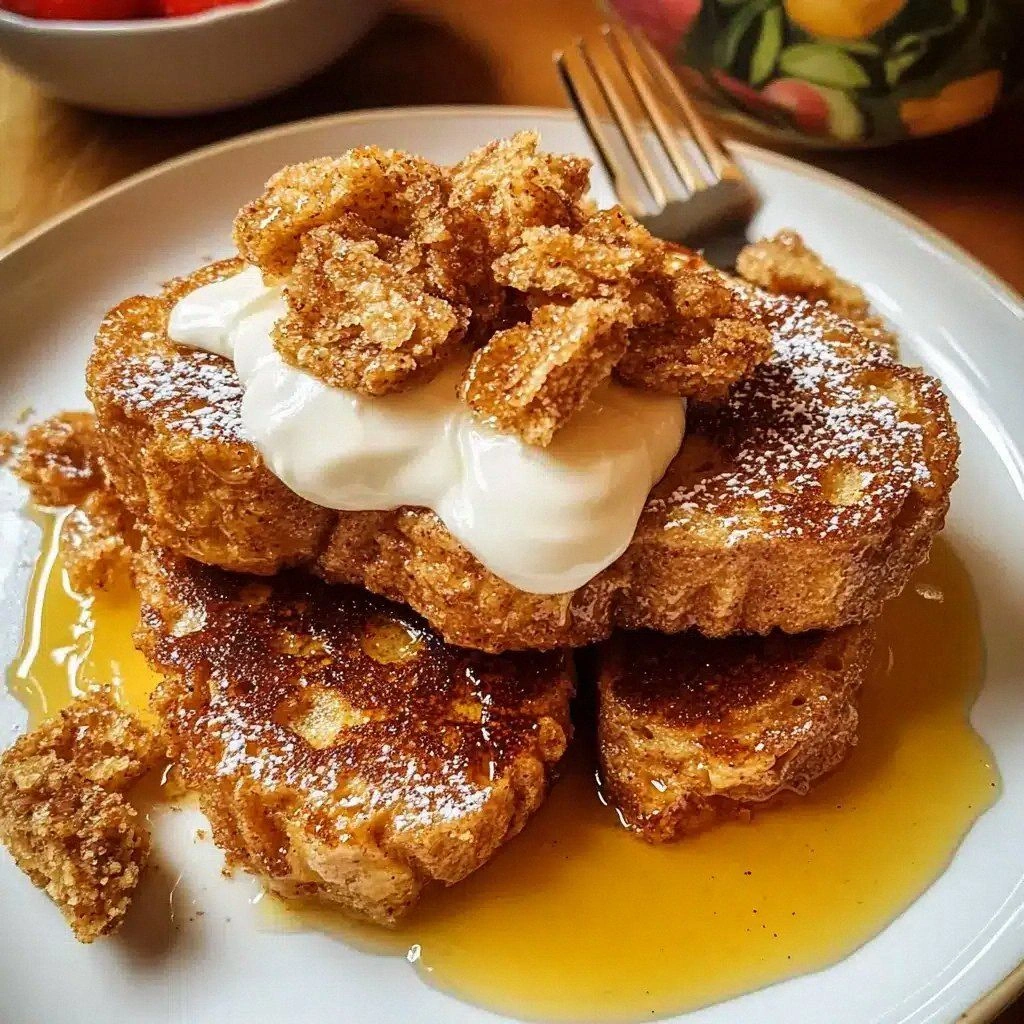
A dusting of powdered sugar and a sprinkle of extra Cinnamon Toast Crunch on top not only adds visual flair but also reinforces the cereal’s crunchy texture. The powdered sugar provides a subtle sweetness that lingers on the palate, while the extra cereal pieces create a textural contrast that keeps each bite interesting. If you prefer a less sweet finish, reduce the powdered sugar to a light dusting or omit it entirely. The key is to finish with something that elevates the dish without overpowering the delicate balance of flavors.
Everything's prepped? Good. Let's get into the real action.
The Method — Step by Step
- Begin by whisking together the eggs, milk, vanilla extract, and a pinch of sea salt in a shallow bowl until fully blended. This simple mixture ensures the flavors distribute evenly across each slice. The whisking process also aerates the eggs, giving the French toast a light, airy interior. If you’re in a rush, use a fork; a whisk is just a more efficient version of the same technique.
- While the batter rests, place your Cinnamon Toast Crunch in a large zip‑lock bag and crush it with a rolling pin until it’s coarsely ground. This step releases the cereal’s natural sugars, allowing them to caramelize more evenly during cooking. The crushed cereal will also adhere better to the bread, creating a more uniform coating. If you don’t have a rolling pin, a sturdy spoon will do the trick.
- Heat a non‑stick skillet over medium heat and add a generous pat of butter. Allow the butter to melt completely, then let it foam for a few seconds before adding the bread slices. The butter should sizzle but not burn; if it does, lower the heat. This butter layer creates a crisp, golden crust that locks in moisture.
- Dip each slice of bread into the batter, ensuring it is fully submerged on both sides. Let the excess drip back into the bowl—this helps prevent a soggy texture. Then, coat each slice in the crushed Cinnamon Toast Crunch, pressing gently to ensure the cereal sticks. The coating should be thick enough to hold its shape but not so heavy that it clumps.
- Place the coated slices onto the skillet and cook for 3 to 4 minutes on each side, or until a golden brown crust forms. As the bread cooks, you’ll hear a satisfying crackle—this is the cereal caramelizing. If you notice the edges pulling away, flip the slice immediately to prevent burning. The goal is a crisp exterior with a warm, custardy interior.
- Once cooked, transfer the slices onto a plate lined with paper towels to absorb any excess butter. This step keeps the toast from becoming greasy and preserves the crunch. While the toast is still warm, drizzle a small amount of maple syrup over the top for a glossy finish. The syrup will also add a subtle sweetness that balances the cinnamon.
- Dust each slice with powdered sugar and sprinkle a few extra pieces of Cinnamon Toast Crunch on top for visual appeal and added crunch. The powdered sugar should be light, creating a delicate cloud that melts into the warm toast. If you prefer a less sweet finish, reduce the powdered sugar or omit it entirely.
- Serve immediately, preferably with a side of fresh fruit or a dollop of whipped cream for an extra indulgence. The warm, crunchy toast pairs wonderfully with the cool fruit or cream, creating a textural and flavor harmony. If you’re hosting a brunch, arrange the slices on a platter and let guests pick their favorites.
- Enjoy the moment of pure bliss as you take that first bite—watch the crunch dissolve into a caramelized, cinnamon‑infused custard that will leave you craving more. This is the moment of truth, where every element you’ve prepared comes together in a harmonious dance of taste and texture.
That's it—you did it. But hold on, I've got a few more tricks that'll take this to another level.
Insider Tricks for Flawless Results
The Temperature Rule Nobody Follows
Many cooks lower the heat too early, causing the outside to burn while the inside remains undercooked. Keep the skillet at a steady medium heat, and use a thermometer to ensure the surface stays around 350°F. If you’re unsure, test a small piece of bread—it should sizzle softly and brown evenly. A friend once burned his French toast by flipping too soon; the result was a soggy, unevenly browned mess that could have been avoided.
Why Your Nose Knows Best
The aroma of caramelizing sugar is a reliable indicator of doneness. When you smell a sweet, buttery scent, you’re close to that perfect golden crust. If you notice a metallic odor, the skillet is too hot. Trust your nose; it’s the most accurate gauge for achieving that coveted crunch.
The 5‑Minute Rest That Changes Everything
After cooking, let the slices rest for five minutes on a rack. This brief pause allows the steam to redistribute, preventing soggy bottoms and ensuring the crust stays crisp. A friend once tried to serve immediately and ended up with a soggy mess; the five‑minute rest saved the day. Resting also lets the flavors meld, creating a richer taste.
The Butter Trick
Use clarified butter instead of regular butter for a higher smoke point, which reduces the risk of burning. Clarified butter also adds a nutty flavor that complements the cinnamon. If you don’t have clarified butter, simply melt butter over low heat until the milk solids separate; skim them off and use the clear liquid.
The Right Bread Choice
Choose bread that has a bit of density, like brioche or challah, to hold the batter and cereal without falling apart. Avoid ultra‑soft, instant breads that can become gummy. A friend once used sandwich bread and was disappointed by the lack of structure; switching to brioche made all the difference.
Creative Twists and Variations
This recipe is a playground. Here are some of my favorite ways to switch things up:
Nutty Crunch Variation
Swap Cinnamon Toast Crunch for chopped toasted almonds or pecans. The nutty flavor adds depth, and the crunch remains intact. Pair it with a drizzle of honey for a sweet‑savory balance. This version is perfect for those who love a bit of protein in their breakfast.
Berry Burst Edition
Add fresh blueberries or sliced strawberries to the batter before coating the bread. The fruit releases juices that mingle with the cinnamon, creating a vibrant, fruity flavor. Top with a dollop of Greek yogurt for a creamy finish. This twist is ideal for a refreshing, light brunch.
Spiced Latte Twist
Infuse the batter with a shot of espresso and a pinch of cardamom. The coffee undertone pairs beautifully with the cinnamon, giving the toast an adult‑friendly flavor profile. Finish with a dusting of cocoa powder for a chocolatey aroma. This variation is a must‑try for coffee lovers.
Vegan Delight
Use plant‑based milk and flaxseed “eggs” to replace dairy and eggs. The texture remains moist, while the flavor stays true to the original. Swap regular butter for coconut oil for a subtle tropical note. This vegan version is both delicious and inclusive.
Savory Spin
Replace the Cinnamon Toast Crunch with crushed cornflakes and add a dash of smoked paprika to the batter. This savory take turns the sweet breakfast into a brunch‑ready dish that pairs well with poached eggs. The crunch and spice create a bold, unexpected flavor.
Holiday Cheer
During the holiday season, add a pinch of nutmeg and a drizzle of peppermint syrup. The festive spices and minty sweetness transport you to a cozy winter kitchen. Serve with a side of hot cocoa for a complete holiday experience.
Storing and Bringing It Back to Life
Fridge Storage
Store the cooked slices in an airtight container in the refrigerator for up to 3 days. Keep the butter and syrup separate until serving to maintain texture. Reheat in a toaster or skillet for 2 minutes on each side. The crunch will return to near‑original levels if reheated properly.
Freezer Friendly
For longer storage, place the cooled slices in a freezer bag, removing as much air as possible. Freeze for up to 2 months. Thaw overnight in the refrigerator before reheating. The texture may be slightly softer, but the flavor remains intact.
Best Reheating Method
The secret to reviving frozen or refrigerated French toast is to add a splash of water to the skillet before reheating. The water steams the bread, restoring moisture without compromising the crunch. Heat on medium, flipping once, until warmed through. The result is a mouth‑watering, freshly cooked experience.